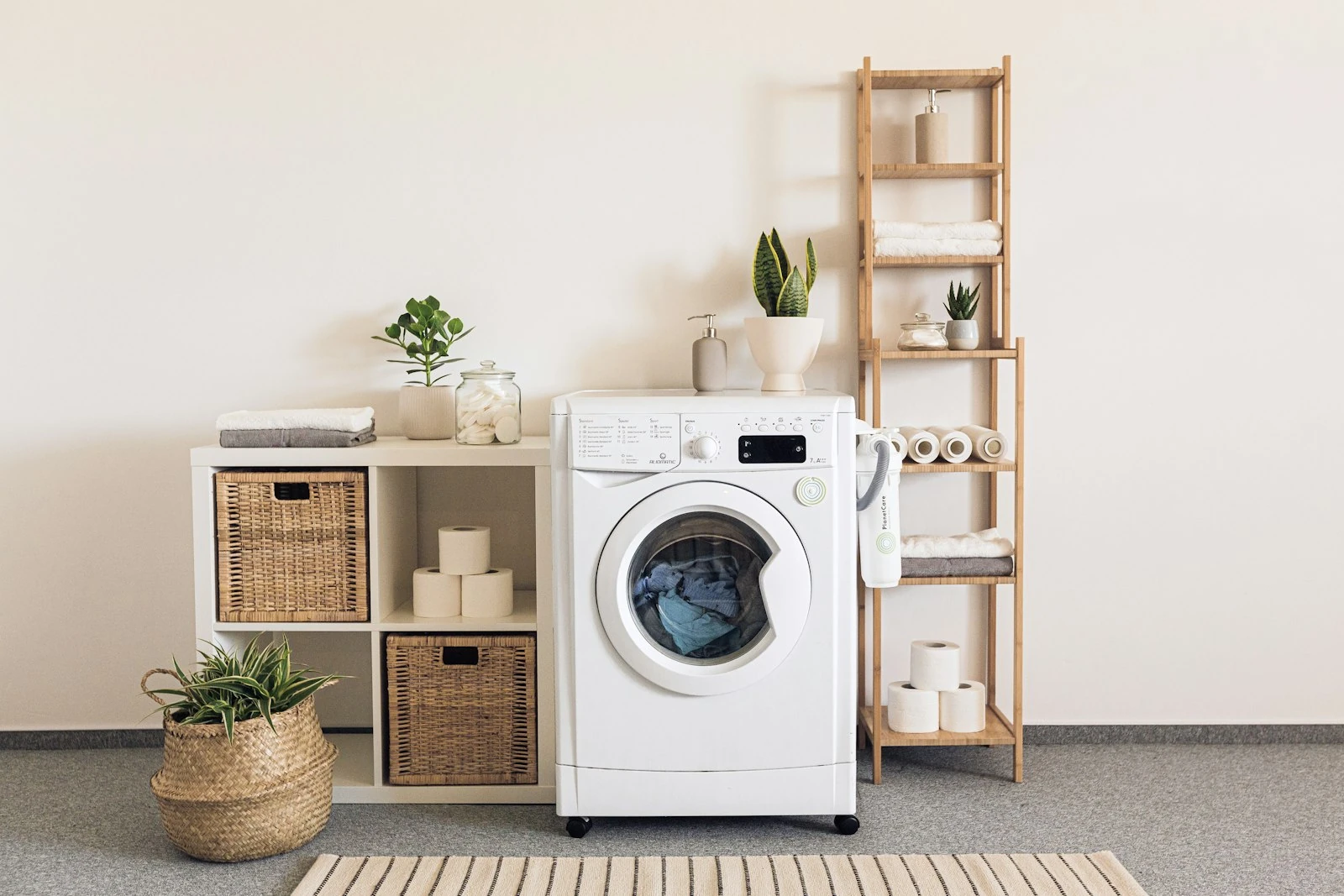

More than half of Britons—58%—said they were confused about how much laundry detergent to use in a 2020 survey commissioned by Samsung UK. Only 24% regularly adjusted the dose for the weight of the load, according to the same research. Although this was a manufacturer-sponsored survey rather than independent testing, it highlights a familiar problem: detergent dosing often involves guesswork (Samsung UK).
A laundry dosing app can potentially cut detergent costs by replacing that guesswork with a suggested amount. However, the UK market is surprisingly limited. Most laundry apps control compatible washing machines or decode care labels; very few provide a documented detergent dose.
The two relevant options are Washread, a general iPhone and iPad utility, and Samsung SmartThings, whose dosing feature works with selected Samsung washing machines.
What does a laundry dosing app do?
A detergent dosing app asks for, scans or receives information that can affect the amount of detergent needed. Relevant factors include:
- The detergent and its concentration
- Load size or weight
- How dirty the laundry is
- Local water hardness
- Washing-machine capacity
- Whether you use liquid, powder or capsules
The app then recommends an amount, usually in millilitres or unit doses. In a compatible auto-dosing machine, the appliance may dispense that amount itself.
This matters because there is no reliable universal dose. Persil says the required quantity depends on factors including load size and soiling, while Ariel tells users to follow the product-specific dosing instructions. Persil’s UK guidance also gives different capsule quantities for standard and larger, heavily soiled or hard-water loads (Persil, Ariel UK, Persil capsule guide).
A useful dosing app should therefore adapt the manufacturer’s instructions—not replace them with an unexplained universal formula.
Can dosing apps actually save money?
Yes, but only when the app helps you reduce genuine overdosing.
The basic calculation is straightforward:
Annual detergent saving = reduction per wash × washes per year × detergent cost per millilitre
For example, cutting an unnecessary 10 ml from four weekly washes would preserve 2.08 litres over a year. Your cash saving would depend entirely on the price of your detergent. This is an illustrative calculation, not a claim about typical household use.
An app is less likely to save money when:
- You already measure the label-recommended quantity accurately.
- You mainly use single-dose capsules.
- Its recommendation is not tailored to your exact detergent.
- You respond to poor cleaning by washing the load again.
- Access requires buying a new compatible washing machine.
Underdosing is not a sound saving strategy. It can leave clothes inadequately cleaned, while unnecessary overdosing wastes product and may leave visible residue. Which? advises measuring detergent instead of guessing and following the pack and washing-machine instructions (Which?).
Washread: a standalone dose helper for Apple devices
Documented functionality
Washread is a paid laundry-care app listed in the UK Apple App Store. Its detergent dose helper uses three inputs:
- Load size
- Soil level
- Water hardness
The listing also describes a warning about overdosing with pods. Other functions include care-label decoding, stain guidance, load sorting and laundry timers.
At the time checked, the UK listing priced Washread at £2.99 and required iOS or iPadOS 17.0 or later. It was also listed for compatible Apple-silicon Macs. No Android version was identified in the researched official listings (Washread on the UK App Store).
The developer states that the app works offline, requires no account and does not collect data. Apple notes that this privacy information is supplied by the developer and has not been independently verified.
Where it may cut detergent costs
Washread is the more accessible option if you have an ordinary washing machine and want a repeatable alternative to pouring detergent by eye. Its consideration of water hardness, soil and load size matches three important variables found in manufacturer dosing instructions.
Its purchase price means the financial case depends on your existing habits. If it prevents regular overuse, the cost may be recoverable through detergent savings. If you already use a marked measuring cup and follow the pack, its dosing feature may add little financial value.
Pros
- Works without a compatible smart washing machine.
- Accounts for load size, soiling and water hardness.
- Provides a warning about pod overdosing.
- One-off UK App Store price rather than a documented subscription.
- Works offline and, according to the developer, collects no data.
- Includes other laundry-planning tools.
Cons
- Available only within Apple’s ecosystem.
- The App Store description does not publish the dosing formula or explain whether recommendations are matched to individual UK detergent products.
- No independent performance or savings study was identified.
- A generic recommendation should not override the detergent label or machine manual.
- The £2.99 cost is unnecessary if a measuring device already solves your problem.
Assessment
Washread is best viewed as a convenient dosing prompt, not a definitive product-specific authority. It may help habitual guessers use less detergent, but the absence of a documented formula or UK detergent database limits confidence in the precise amount shown.
Samsung SmartThings: product scanning for selected washers
Documented functionality
Samsung’s UK support documentation says the SmartThings Clothing Care feature can scan a detergent barcode and recommend an amount for the following cycle. If scanning fails, you can enter detergent, softener and laundry information manually.
This detergent-scanning function is restricted to selected Samsung models. Samsung’s compatibility table documents it for the WW8400D and WW7400D ranges, while listed WW7000D, WW6400D and WW6000D models do not support it (Samsung UK support).
On a supported Auto Dose model, Samsung says the scanned detergent information can be used alongside laundry weight to determine the dispensed quantity. The machine, rather than the phone alone, then releases detergent from its reservoir (Samsung WW7400D product page).
SmartThings is free on the UK Apple App Store and is available on Android and iOS. A Samsung account, internet connection and compatible appliance are required for the relevant washing-machine features. Feature availability varies by model and country.
Where it may cut detergent costs
SmartThings has an important advantage: it can identify the detergent and work with the washer’s measured load rather than relying entirely on your estimate. On supported machines, automatic dispensing also removes the final manual-pouring step.
That creates a credible route to lower detergent consumption if you previously overdosed. However, SmartThings is not a cost-effective reason by itself to replace a functioning washing machine. Any detergent saving is likely to be small beside the purchase price of new hardware.
Samsung markets percentage savings for some AI Wash models, but those figures come from Samsung’s own model-specific conditions. They should not be treated as guaranteed household savings.
Pros
- The app itself is free.
- Scans detergent barcodes and provides a recommended amount.
- Can combine detergent information with the appliance’s load measurement.
- Supports automatic dispensing on compatible machines.
- Available on Android and iOS.
- Reduces the need to estimate load weight and pour each dose manually.
Cons
- The key dosing feature works only with selected Samsung washers.
- Requires a Samsung account, internet access and product registration.
- Barcode coverage may limit which detergent products can be recognised.
- Samsung does not promise identical feature availability across every model or country.
- The UK iOS listing says the app may handle identifiers, contact information, location, usage data and diagnostics, depending on the features used.
- Buying compatible hardware purely for detergent savings is unlikely to make financial sense.
Assessment
For someone who already owns a supported Samsung washer, SmartThings offers the strongest documented connection between a specific detergent, load weight and automatic dispensing. For everyone else, it is not a general-purpose detergent calculator.
Why LG ThinQ is not a direct alternative
LG sells UK washing machines with its ezDispense system and ThinQ connectivity. LG says ezDispense weighs the laundry and releases an appropriate detergent amount, while ThinQ supports functions such as remote control, cycle downloads, alerts and usage monitoring (LG UK buying guide, LG ThinQ).
However, the researched UK documentation does not establish that the ThinQ app itself calculates a manual detergent dose for use with an ordinary machine. The dosing work is primarily an appliance feature. It is therefore not a like-for-like alternative to Washread or SmartThings’ documented detergent scanner.
How to judge a detergent dose recommendation
Before relying on any laundry dosing app, check four things.
1. Does it recognise your exact product?
Liquid, powder, gel and capsules are not interchangeable. Concentration can also vary within the same brand. A generic millilitre figure is less dependable than a recommendation based on the current pack instructions.
2. Does it account for local water hardness?
Hardness affects manufacturer dosing guidance. You can normally find your area’s water-hardness information through your water supplier. Avoid guessing if the app offers several hardness bands.
3. Is the load size measured or estimated?
An appliance sensor can weigh or assess a load more consistently than a person looking at the drum. With a standalone app, use an honest estimate and remember that machine capacity is the maximum dry-laundry weight, not the weight of every normal load.
4. Can you verify the result against the label?
Treat the pack and washing-machine manual as the final checks. Be cautious when an app recommends substantially less or more than both sources without explaining why.
The most economical approach
For most households, the cheapest dosing system remains simple:
- Read the current detergent label.
- Check your water hardness.
- Estimate or weigh the dry load.
- Use a clearly marked measuring cup or dosing ball.
- Record the amount that produces satisfactory results for that combination.
A dosing app adds value when it makes this process more consistent. It does not create savings automatically, and it cannot compensate for inaccurate inputs or unsupported detergent formulas.
Conclusion
Laundry dosing apps can cut detergent costs when they correct regular overpouring. Washread offers a convenient standalone helper for Apple users, although its calculation method is not documented in the App Store listing. Samsung SmartThings provides more product- and appliance-specific assistance, but only on selected Samsung machines.
The best financial result comes from accurate, repeatable dosing—not simply choosing the lowest number an app displays.
References
- Samsung UK: Detergent dosing survey
- Washread: UK Apple App Store listing
- Samsung UK: SmartThings detergent and care-label scanning
- SmartThings: UK Apple App Store listing
- Samsung UK: WW7400D Auto Dose and SmartThings
- Persil UK: Detergent FAQs
- Ariel UK: Dosing guidance
- Which?: Laundry habits and detergent measurement
- LG UK: Washing-machine buying guide