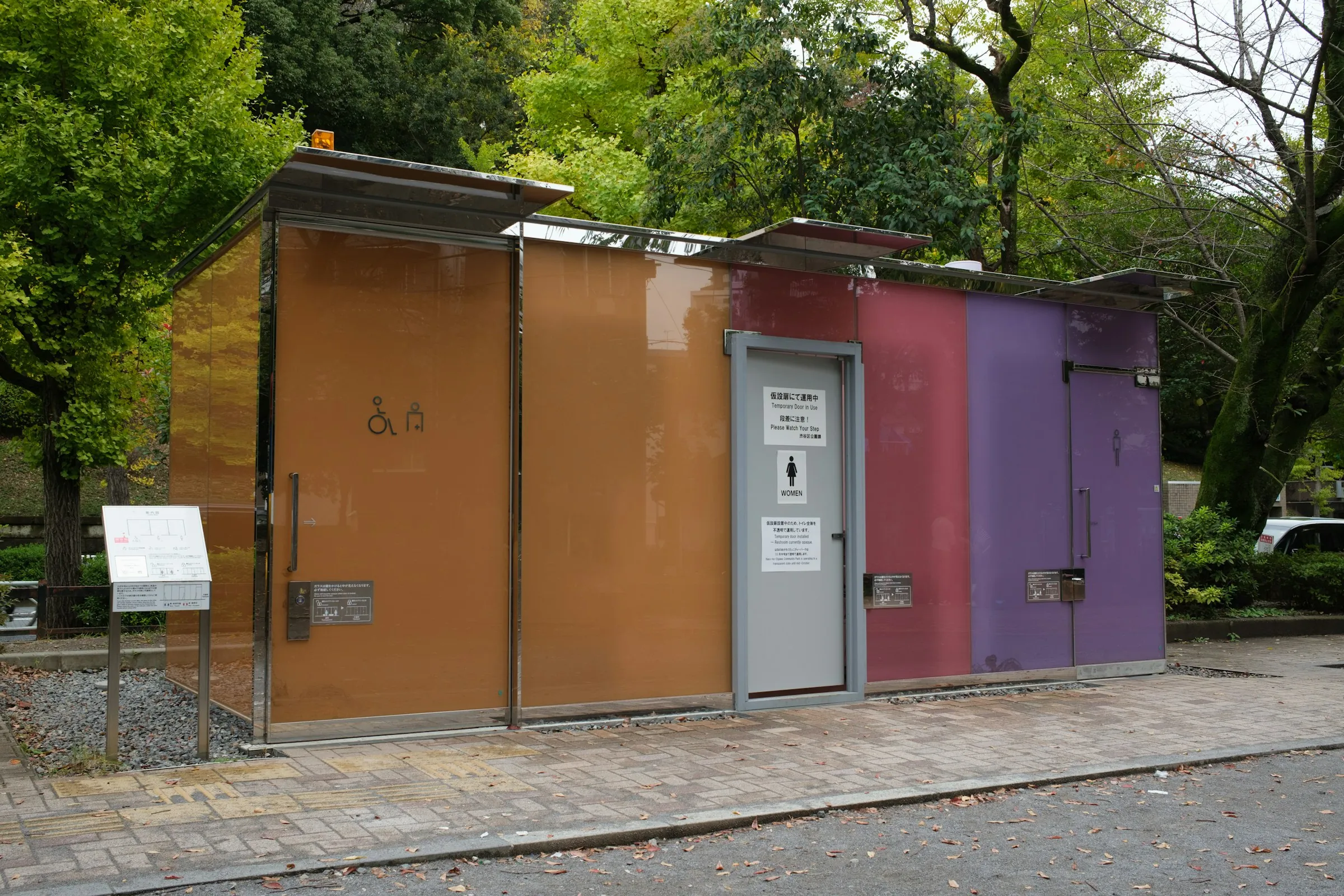

Finding a restroom without buying something can be surprisingly difficult. New York City, for example, had only 975 operational public restrooms for 8.48 million residents in June 2025—roughly one restroom for every 8,697 people, according to the New York City Independent Budget Office.
A public bathroom app can make the search easier, but there is an important catch: “free app” and “free restroom” do not mean the same thing. Some free apps locate bathrooms without showing whether you must pay, make a purchase, request a key, or be a customer.
The short answer
Flush Toilet Finder is the strongest general choice for most U.S. users. Its official listings document fee, key, accessibility, directions, and offline information when those details are known. It is available for both iOS and Android.
For iPhone users who specifically want a free-restroom filter, Toilet Finder & Bathroom Map provides the clearest documented filter. PeePal Refuge on iOS and Refuge Restrooms on Android are better secondary choices when gender-neutral or accessible facilities matter more than confirmed no-cost access.
No app can guarantee that a restroom will be open, clean, free, or available when you arrive. Most listings depend partly or entirely on community-maintained data.
How a free restroom finder works
A restroom finder app usually combines your phone’s location with a database of bathrooms. You can typically:
- Display public restrooms near your current location
- Search around another address or destination
- Filter listings by cost, accessibility, or available facilities
- Open directions in a navigation app
- Add, rate, or report locations
- Download or cache some information for offline use
The most useful distinction for budget-conscious users is whether the app identifies:
- A restroom explicitly marked as free
- A possible usage fee
- A required key or access code
- A restroom inside a customer-only business
- Unknown access conditions
An “unknown” listing should not be treated as free. A coffee shop, restaurant, hotel, or store may restrict its restroom to customers even if an app describes the location as public.
Price and feature comparison
U.S. market, as of 2026-09-01
| App | U.S. platforms | U.S. price | Helps identify free access? | Other useful functions |
|---|---|---|---|---|
| Flush Toilet Finder | iPhone, iPad, Android | iOS: free, no in-app purchases. Android: free download with ads and in-app purchases; purchase prices not publicly documented | Shows whether a fee or key is required when known | Offline database, directions, accessibility information, community additions and reports |
| Toilet Finder & Bathroom Map | iPhone, iPad | Free download; Pro offers shown in the U.S. App Store include $2.99 weekly, $9.99 yearly, and $14.99 or $29.99 lifetime | Dedicated free-toilet filter is documented; which functions require Pro is not publicly documented | Opening hours, accessibility, changing-table filters, offline list, OpenStreetMap updates |
| PeePal Refuge | iPhone, iPad | Free; no in-app purchases listed | No documented fee or free-access filter | Unisex, accessibility and changing-table filters, ratings, notes, directions |
| Refuge Restrooms | Android | Free download; no paid plan publicly documented | No documented fee or free-access filter | Focus on safer restrooms, accessibility markers, address search, directions and community additions |
Prices are those displayed in the U.S. storefronts and may change. App availability and features can also depend on your device and operating-system version.
How this comparison was researched
This is a researched comparison, not a hands-on app test.
The research was completed on September 1, 2026, for the United States. The criteria were current U.S. availability, app price, ability to distinguish free or paid access, directions, accessibility and family filters, offline support, and important regional limitations.
Feature and price claims come primarily from official U.S. App Store and Google Play listings. Government sources were used for public-restroom availability and recent local developments. General navigation apps, city-only services, and apps without a current official U.S. listing were excluded as primary competitors.
Flush Toilet Finder: best general option
Documented functionality
Flush says its worldwide database contains more than 200,000 restrooms. Its official listings document nearby search, directions, accessibility information, and indicators showing whether a restroom has a fee or requires a key. The Android listing also says the restroom database is stored on the phone for offline access (Apple App Store, Google Play).
The iOS app is free with advertising and no in-app purchases. Google Play lists the Android version as containing ads and in-app purchases, but does not publicly display the purchase amounts.
Research-based assessment
Flush answers the central question more directly than most alternatives because it distinguishes fee and key requirements when the database contains that information. Its cross-platform and offline support also make it practical for road trips or areas with weak reception.
However, “when known” matters. An unmarked listing is not proof of free access, and the official pages do not promise real-time verification of opening hours or access policies.
Pros
- Available on both major U.S. mobile platforms
- Documents fee and key indicators
- Provides directions and accessibility details
- Supports offline restroom lookup
- Free iOS version has no in-app purchases
Cons
- Missing fee information may be mistaken for free access
- Community-maintained locations can become outdated
- Opening hours are not documented as a core feature
- The ad-supported iOS listing discloses tracking and collection of location and advertising-related data
Toilet Finder & Bathroom Map: strongest iPhone filters
Documented functionality
The developer says this iOS app uses OpenStreetMap data and contained more than 660,000 restroom locations worldwide as of May 2026. Its documented filters include free toilets, wheelchair-accessible restrooms, changing tables, opening hours, public access, and numerous facility details.
The app can show a distance-sorted list offline, although map tiles still require an internet connection. Its June 2026 update added in-app OpenStreetMap editing and daily automatic data updates (U.S. App Store listing).
The listing describes 125,088 locations as “verified free.” That is the developer’s wording for its worldwide dataset, not evidence that every listing has been independently inspected or is in the United States.
Research-based assessment
This app has the most specific documented filtering for someone trying to find a free restroom near them. It also offers unusually detailed family and accessibility filters.
Its main limitations are platform availability and unclear plan boundaries. The U.S. listing shows several Pro prices but does not clearly identify which advertised functions are included without payment.
Pros
- Dedicated free-restroom filter
- Detailed accessibility and changing-table filters
- Opening-hour and public-access information where available
- Partial offline functionality
- Community data can receive daily updates
Cons
- Not currently documented for Android
- Free-versus-Pro feature boundaries are unclear
- OpenStreetMap entries can be incomplete or outdated
- Map tiles do not work fully offline
- The U.S. App Store privacy label says diagnostics may be used for tracking
PeePal Refuge: best inclusive option for iPhone
Documented functionality
PeePal uses the crowdsourced Refuge Restrooms database. Its U.S. App Store listing documents search, directions, community ratings, notes, and filters for unisex restrooms, accessibility, and changing tables.
Version 1.0, released in June 2026, added changing-table filtering and local storage of previously viewed restrooms for use with a slow connection. The app is free and requires iOS or iPadOS 17.4 or later. Its developer declares that the app does not collect data, although Apple notes that developer privacy disclosures are not independently verified (U.S. App Store listing).
Research-based assessment
PeePal is particularly useful for families, transgender and gender-nonconforming people, and anyone who needs accessible or unisex facilities. It is not the best standalone tool for avoiding spending, because its listing does not document a fee or customer-only filter.
Pros
- Free, with no in-app purchases listed
- Unisex, accessibility and changing-table filters
- Community ratings and location notes
- Uses the established Refuge Restrooms data source
- Developer declares no data collection
Cons
- No documented free-restroom filter
- Requires a relatively recent iOS version
- Crowdsourced coverage will vary by location
- Previously viewed locations are cached, but full offline coverage is not documented
Refuge Restrooms: best inclusive option for Android
Documented functionality
Refuge Restrooms is designed to help transgender, intersex, and gender-nonconforming people find safer facilities. Its Android app provides map pins, directions, address search, accessibility markers, and community submissions.
The app returned to Google Play after a May 2026 device-targeting update. Its Google Play declaration says it does not collect or share data (Google Play listing).
Research-based assessment
Refuge Restrooms provides valuable safety and accessibility context that a basic toilet map may miss. However, it should be paired with another source when avoiding a purchase is the main goal, because its official listing does not document fee, opening-hour, key, or changing-table filters.
Pros
- Free Android availability
- Clear focus on safer and more inclusive facilities
- Accessibility markers and address search
- Community members can add missing bathrooms
- Developer declares no data collection or sharing
Cons
- No documented fee or free-access filter
- No iOS version under the same official app listing
- Opening hours are not documented
- Coverage and accuracy depend on community contributions
How to avoid an unnecessary purchase
A restroom marker alone does not confirm permission to enter. Before walking or driving out of your way:
- Look for an explicit “free,” “no fee,” or “public access” label.
- Check whether the location is a park, library, transit facility, highway rest area, or government building rather than a customer-only business.
- Review opening hours using an official location page when the restroom app does not provide them.
- Treat old ratings and unverified listings cautiously.
- Compare the detour with the likely cost of a small purchase. Driving several extra miles may erase the financial benefit.
- Keep an inclusion-focused app available if you need a changing table, wheelchair access, or a gender-neutral restroom.
Local government maps can sometimes be more authoritative than national apps. New York City, for example, introduced an official Google Maps layer covering restrooms operated by city agencies and civic institutions as part of its “Ur In Luck” initiative (NYC Mayor’s Office).
Illustrative savings scenario
Suppose you normally buy a $2 drink twice a week solely to gain restroom access:
- $2 per purchase × 2 purchases per week = $4 per week
- $4 × 52 weeks = $208 per year
If a restroom finder consistently identifies a suitable no-purchase option for both weekly stops, the illustrative gross savings would be $208 per year.
That amount is not guaranteed. The real result could be lower after considering extra driving, parking, app subscriptions, unavailable facilities, or purchases you would have made anyway.
What is changing
Restroom data is becoming more detailed and more local. In 2026, Toilet Finder & Bathroom Map added daily OpenStreetMap updates, PeePal added a changing-table filter and limited caching, and Flush continued receiving updates on both major platforms.
Cities are also improving their own public data. The New York City Council approved a strategy in 2025 with a goal of at least 2,120 public bathrooms by 2035, while its restroom analysis now tracks operating status and facility conditions (New York City Council).
These developments improve coverage, but they do not eliminate the main weakness of restroom finder apps: access conditions can change faster than databases do.
Conclusion
Flush Toilet Finder is the most balanced U.S. option because it works on iOS and Android and documents fee, key, accessibility, directions, and offline information. Toilet Finder & Bathroom Map offers the strongest free-restroom filters for iPhone users. PeePal Refuge and Refuge Restrooms provide better context for inclusive and accessible facilities, but they do not confirm no-cost access.
The safest interpretation of any result is simple: an explicit free-access label is useful evidence, while missing information is still unknown.
References
- New York City Independent Budget Office: Public Restrooms in New York City
- Flush Toilet Finder—U.S. App Store
- Flush Public Toilets—Google Play
- Toilet Finder & Bathroom Map—U.S. App Store
- PeePal Refuge—U.S. App Store
- Refuge Restrooms—Google Play
- NYC Mayor’s Office: Ur In Luck
- New York City Council: Public Bathroom Strategy