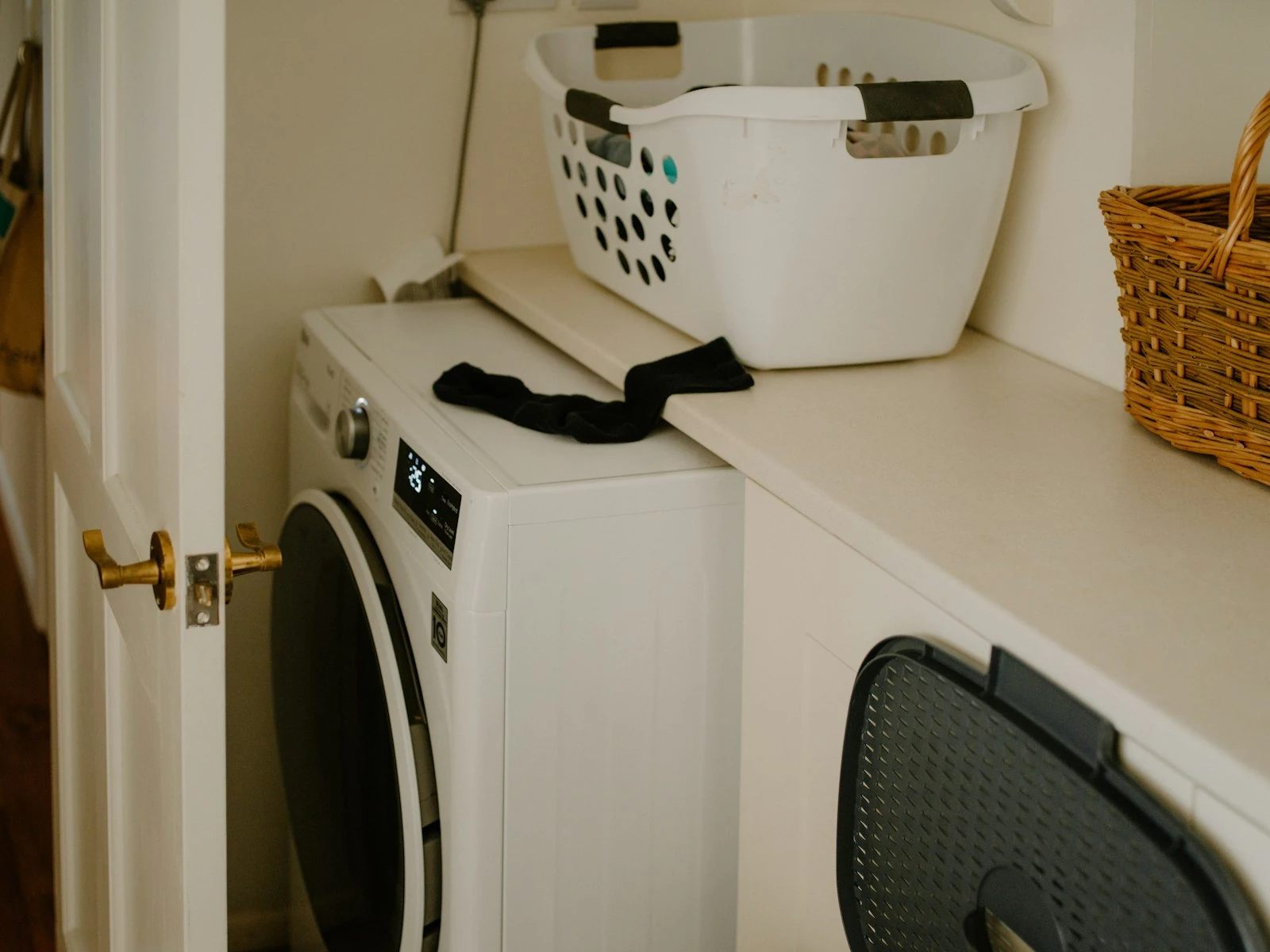

In 2024, U.S. spending on laundry and dry-cleaning services totaled $16.116 billion—so yeah, this “small” expense adds up fast. (fred.stlouisfed.org)
If you’re trying to land the cheapest laundry service, the trick isn’t finding the lowest “$ per lb” promo. It’s learning how to compare apps the way the bill hits your card: minimums + fees + turnaround speed + add-ons.
What “finding the cheapest” really means (in app terms)
Most laundry apps price your order in one of these ways:
- Per-pound wash & fold (simple, but minimum charges matter)
- Per-bag / per-load flat rate (great if you can consistently fill the bag)
- Per-item pricing (common for dry cleaning and specialty pieces)
- Memberships/subscriptions (often remove fees or add credits)
So the “cheapest” app for you is the one with the lowest all-in total for your typical laundry week—not someone else’s.
A simple method to compare apps (without getting fooled by fees)
1) Build a “standard test order”
Pick one baseline you’ll compare everywhere. For example:
- 20 lb / ~9 kg of everyday wash & fold, normal turnaround
- 1 bulky item (like a comforter) if you regularly send those
This matters because many services have minimum charges (so a small basket can be weirdly expensive).
2) Compare the total price, not the headline rate
A quick reality check: one popular service lists a $9.95 pickup & delivery fee, a $5 service fee, and a $30 minimum order (before discounts/taxes). (rinse.com)
That’s not “bad”—it’s just exactly why you can’t judge on “$ per lb” alone.
3) Watch for “drip pricing” behavior
A good pricing screen shows you the real total early. Regulators have been calling out pricing that hides mandatory fees; the FTC has said a proposed rule would prohibit “advertising prices that hide or leave out mandatory fees.” (ftc.gov)
Translation: if an app makes you click five times to finally see the minimum charge, that’s a red flag for your budget.
4) Decide if speed is worth paying for
Rush service can double the cost. If you don’t actually need next-day, don’t pay for it.
Also, time has value. The latest U.S. time-use data shows people spent an average 0.17 hours per day on laundry in 2024 (about 10 minutes/day). (bls.gov)
If paying a bit more saves you stress and time, “cheapest” might mean best cost-per-week, not lowest receipt.
5) Only consider subscriptions if you’ll use them consistently
Subscriptions can be money-savers when they:
- remove per-order fees, or
- give credits/cashback you’ll actually use
But if you order once a month, a membership can quietly become your most expensive “laundry line item.”
5 apps to help you find the cheapest laundry service
Below are five apps that make price-checking practical. I’m writing this like a real-world “budget test”: I focus on what you see at checkout (minimums, fees, and pricing model), because that’s what decides cheap vs. not-cheap.
1) Poplin (US) — best for predictable per-pound math
How pricing works (what I look at first):
- Standard (next-day) is $1/lb in most zip codes (higher in some)
- Express is $2/lb in most zip codes (higher in some)
- Free pickup and delivery
- Minimum charge is typically $30 (Standard) / $40 (Express) (poplin.zendesk.com)
How to get the cheapest outcome
- If your laundry is light, combine loads until you clear the minimum without wasting money.
- Skip Express unless you truly need it.
Pros
- Easy to compare: per-pound rate + clear minimums
- Free pickup/delivery helps the all-in total (poplin.zendesk.com)
Cons
- Rates/minimums can vary by location
- Oversized items can add extra charges (so comforters can change the math) (poplin.zendesk.com)
2) Rinse (US/Canada in select cities) — best if you place larger orders or use subscriptions
How pricing works (the budget gotchas):
- Wash & Fold minimum order: $30 (rinse.com)
- Pay-as-you-go orders list a $9.95 pickup & delivery fee and $5 service fee (rinse.com)
- Those fees (and minimum-order adjustments) can be waived with certain subscriptions (rinse.com)
How to get the cheapest outcome
- If you order frequently, compare pay-as-you-go vs. a plan that waives per-order fees.
- If you order infrequently, avoid paying a subscription just to save a fee twice.
Pros
- Transparent fee list (you can actually budget it)
- Subscription option can reduce per-order fee pain (rinse.com)
Cons
- Minimum order + per-order fees can make small loads expensive (rinse.com)
- Rush adds another layer of cost (rinse.com)
3) hampr (US) — best if you can reliably fill a big “bag load”
How pricing works
- Membership is $39/year (paid annually) (help.tryhampr.com)
- hampr frames pricing around a bag size: one 13-gallon kitchen bag ≈ 15 lb of laundry (help.tryhampr.com)
- Price per load varies by market (you check your address to see details) (tryhampr.com)
How to get the cheapest outcome
- This is usually strongest when you can hit that ~15 lb sweet spot consistently.
- If you’re doing tiny loads, flat-rate models often punish you.
Pros
- Flat-rate-per-load thinking can be cheaper than per-pound if you fill the bag
- Clear load-size definition helps you avoid “mystery weight” anxiety (help.tryhampr.com)
Cons
- Membership cost is real—only worth it if you’ll use it enough
- Per-load pricing is market-specific, so you must price-check in-app/by address (tryhampr.com)
4) Laundryheap (International: UK + other markets) — best for built-in estimating and membership-style savings
How pricing works
- The app uses a price estimator and weighs wash services in kg or lb (depending on location) (help.laundryheap.com)
- There’s a minimum order value and service fee that vary by area (help.laundryheap.com)
- Subscription options can remove service fees; one tier also returns 10% as wallet credit (with conditions) (help.laundryheap.com)
How to get the cheapest outcome
- Use the estimator to build your “standard test order,” then compare total to other apps.
- If you order frequently, the “no service fees” benefit can matter more than a tiny per-kg difference.
Pros
- Estimator-led pricing makes comparison shopping straightforward (help.laundryheap.com)
- Membership features are explicitly described (so you can do real math) (help.laundryheap.com)
Cons
- Minimum order value varies by location, so “cheap” depends on where you live (help.laundryheap.com)
- Wallet credit rules/expiry can reduce the effective savings if you don’t reorder soon (help.laundryheap.com)
5) Hamper (Houston, TX area) — best for a clear local price list
How pricing works
- Wash & Fold is listed at $1.99/lb with a 10 lb minimum (usehamper.com)
- It’s an app-based pickup/delivery service (iOS listing) (apps.apple.com)
How to get the cheapest outcome
- If you’re near the service area, this is the kind of app where you can do quick math:
($1.99 × pounds), but don’t forget the minimum.
Pros
- Straightforward published pricing and minimums (usehamper.com)
- Good fit if you want a simpler “local service with an app” setup (apps.apple.com)
Cons
- Not a national app; it’s geographically limited (apps.apple.com)
- Per-pound pricing means heavy weeks cost more (no flat-rate upside) (usehamper.com)
What’s trending right now (and why it matters for your bill)
- Minimum charges are everywhere: many services effectively steer you toward larger, consolidated orders.
- Subscriptions are replacing “random promo codes”: fee waivers and credits are becoming the main way apps advertise savings. (rinse.com)
- Price transparency is becoming a competitive advantage: when apps show the total early (minimums, fees, rush), it’s easier to stay on budget—exactly the kind of clarity regulators are pushing for in online pricing. (ftc.gov)
Quick wrap-up (no fluff)
Finding the cheapest laundry service with apps is mostly a comparison game: pick a standard basket, compare all-in totals, and treat minimums/fees like part of the price—not fine print. With the right match, you can keep laundry spending predictable (and maybe buy back some time, too). (bls.gov)
References
- U.S. Bureau of Economic Analysis (via FRED), Personal consumption expenditures: Laundry and dry cleaning services (DDRYRC1A027NBEA): https://fred.stlouisfed.org/series/DDRYRC1A027NBEA
- U.S. Bureau of Labor Statistics (BLS), American Time Use Survey — Average hours per day spent in selected household activities (2024): https://www.bls.gov/charts/american-time-use/activity-by-hldh.htm
- Federal Trade Commission (FTC), FTC Proposes Rule to Ban Junk Fees (Oct 2023): https://www.ftc.gov/news-events/news/press-releases/2023/10/ftc-proposes-rule-ban-junk-fees
- Rinse, Pick-up and Delivery (fees, rush, subscriptions): https://www.rinse.com/faqs/pick-up-and-delivery/
- Rinse, Does Rinse have a minimum order amount? https://www.rinse.com/faqs/billing-and-payments/does-rinse-have-a-minimum-order-amount/
- Poplin Help Center, Price (per-lb pricing, minimums): https://poplin.zendesk.com/hc/en-us/articles/15462163795355-Price
- Poplin Help Center, Order Minimum: https://poplin.zendesk.com/hc/en-us/articles/15462163967003-Order-Minimum
- hampr Help Center, How much does hampr cost? (membership, 15 lb bag definition): https://help.tryhampr.com/en/articles/6717128-how-much-does-hampr-cost
- hampr, Pricing (market-based per-load pricing): https://www.tryhampr.com/pricing/
- Laundryheap Help Center, How does the payment work? (estimator, minimum/service fee, weight basis): https://help.laundryheap.com/en/articles/6265279-how-does-the-payment-work
- Laundryheap Help Center, What is the Laundryheap subscription? (no service fees, 10% wallet credit): https://help.laundryheap.com/en/articles/8229252-what-is-the-laundryheap-subscription
- Hamper, Pricing (Wash & Fold $/lb and minimum): https://www.usehamper.com/pricing
- Apple App Store, Hamper Laundry & Dry Cleaning (app listing): https://apps.apple.com/us/app/hamper-laundry-dry-cleaning/id6470392468