
Yes—Finanzguru can split one purchase into multiple spending categories. Its official instructions describe dividing a transaction into separate amounts for more accurate analysis and budgeting. The main limitation for US readers is regional: Finanzguru focuses its bank connections on Germany and Austria; the reviewed documentation does not establish support for US bank accounts. Finanzguru splitting guide, regional bank support.
For a household managing US accounts, YNAB offers a documented way to do the same job. A manual spending log can also work if you only need to divide occasional receipts.
What does splitting a purchase mean?
A split transaction assigns portions of one payment to different expense categories. YNAB’s documentation explicitly supports spending from multiple categories within a single transaction. YNAB split transactions.
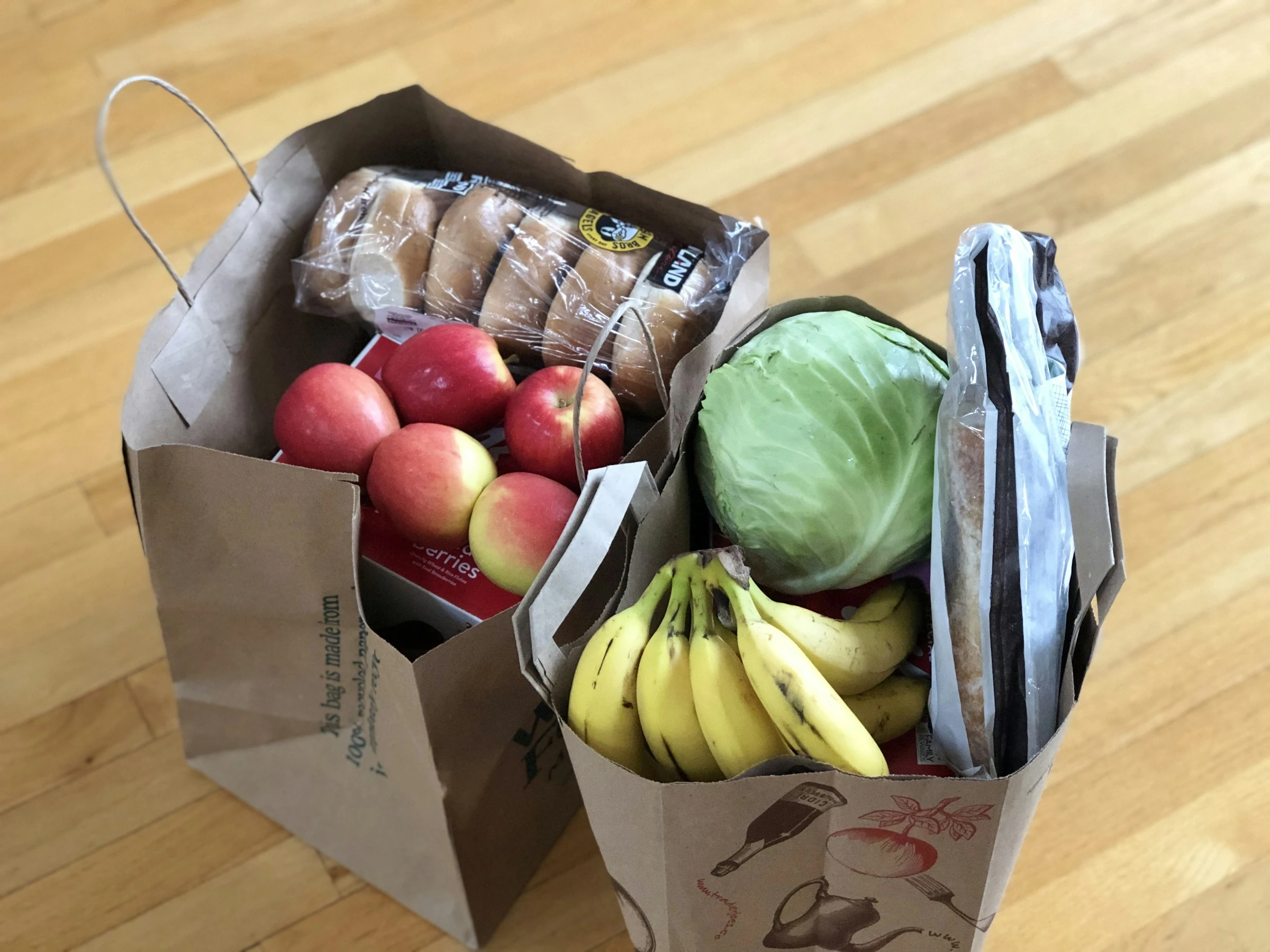
For example, imagine a hypothetical $120 Target purchase, with any receipt tax already included in these amounts:
| What you bought | Budget category | Amount |
|---|---|---|
| Food | Groceries | $72 |
| Cleaning products | Household supplies | $18 |
| Clothing | Clothing | $30 |
| Total payment | $120 |
Putting the entire purchase under groceries would overstate grocery spending by $48. Splitting it gives each category its actual share.
This changes your spending records, not the amount you paid. The useful distinction is between where you shopped and what you bought.
How Finanzguru splits a transaction
For Finanzguru’s German-language service, the developer documents this process:
- Open the transaction.
- Tap “Bearbeiten”—Edit.
- Select “Buchung aufteilen”—Split transaction.
- Enter the amount for the second portion and add further portions as needed.
- Assign the portions to the relevant categories.
Finanzguru allows as many portions as you need. They appear in the account history, and you can undo a split. One documented restriction matters: split portions cannot be included in contracts. Finanzguru splitting instructions.
Does splitting require Finanzguru Plus?
The reviewed splitting guide does not specify a subscription requirement. The current plan comparison also does not list splitting separately, so its exact free-versus-paid entitlement is not publicly documented in those sources.
However, Finanzguru’s German-language plan comparison, updated September 3, 2026, explicitly places budgets behind Plus. Basic analyses remain available in the free version, with transaction history limited to three months. Splitting a purchase and accessing all the budgeting tools are therefore separate questions. Finanzguru plan comparison.
Pros and cons for US readers
- Pro: Documented category splitting directly solves the mixed-purchase problem.
- Pro: Splits are reversible.
- Con: US bank connectivity is not established by the regional documentation.
- Con: Split portions have a contract restriction, and budgets require Plus in the documented German offering.
Assessment: Finanzguru makes sense to evaluate if you already use it with supported German or Austrian accounts. It is unsuitable as a recommendation for someone who specifically needs verified US bank syncing. US storefront download availability could not be confirmed during this research.
YNAB: a documented US alternative
YNAB is available in the US Apple App Store, and its developer documents web, iOS, and Android access. YNAB platforms.
For US users, its split function lets you open a transaction, choose multiple categories, and enter an amount for each. On the web, you edit the transaction’s category field and select Split. YNAB can also distribute a remaining amount proportionally across the splits. YNAB splitting guide.
For an exact receipt-based breakdown, use the actual amounts attributable to each category. A proportional allocation is a budgeting convenience; it may not reproduce the receipt’s item-level tax allocation.
Pros and cons
- Pro: Documented splitting supports the same grocery, household, and clothing example above.
- Pro: You can enter transactions manually as well as import them. US app listing.
- Pro: One subscription supports sharing with up to six people.
- Con: Continued use requires a subscription after the trial.
- Con: Direct import supports selected US banks, so it does not promise compatibility with every institution. YNAB pricing and FAQs.
Assessment: YNAB suits singles or families who want receipt splitting within a broader budgeting routine. It is harder to justify if your only need is dividing one or two purchases a month.
Price and function comparison
As of 2026-09-13. US costs below cover 12 paid months, excluding trials, promotions, and any applicable subscription tax. YNAB figures use direct subscription prices; no separate setup fee is listed. Finanzguru is included for the original feature question, not as a verified US service.
| Option | Multiple categories per purchase | Price and 12-month cost | Platforms and material restrictions |
|---|---|---|---|
| Finanzguru | Yes, in its documented German offering | US price, fees, and 12-month total: not publicly documented | iOS/Android in its existing offering; US download availability unconfirmed; bank focus is Germany/Austria |
| YNAB—annual | Yes | $109 upfront for 12 months | Web, iOS, Android; selected US bank connections |
| YNAB—monthly | Yes | $14.99 × 12 = $179.88 | Same subscription functionality; higher cost over 12 months |
| Manual spending log | Yes, using separate category entries | $0 incremental cost, assuming you already have paper or suitable software | No bank integration; you enter and total everything yourself |
Sources: Finanzguru splitting, regional scope, mobile subscriptions, YNAB pricing, YNAB platforms.
The manual option is an illustrative workflow, not a commercial plan. Record the receipt total as a reference, then count only its category portions toward spending totals. Counting both would double your reported expense.
Can better categorization save money?
Splitting alone saves nothing: the hypothetical $120 purchase still costs $120. Savings require a later change in what you buy.
Hypothetical illustrative savings scenario
Assume separating nonfood purchases from groceries helps you identify and avoid $20 of optional spending per month for 12 months. Assume no additional equipment costs, no subscription tax, and no monetary value assigned to your tracking time.
- Gross reduction: $20 × 12 = $240
- With annual YNAB: $240 − $109 = $131 net savings
- With monthly YNAB: $240 − $179.88 = $60.12 net savings
- With an existing manual log: $240 − $0 = $240 net savings
The subscription inputs come from YNAB’s published prices; the spending reduction is an assumption, not an observed result or guarantee.
Annual YNAB breaks even at approximately $9.09 in monthly spending reductions, before applicable tax. If a manual log produces the same behavior change, it leaves you ahead by the subscription fee.
Comparison method
Research was conducted on September 13, 2026, for US households. Criteria were category splitting, regional availability, bank support, platforms, subscription restrictions, and comparable annual costs.
Sources were developer help pages, official pricing, and app-store listings. This is a researched comparison, not a hands-on test. Recommendations reflect the documented features and the stated household scenarios.
The scope includes Finanzguru, one directly relevant US alternative, and a manual baseline. Group reimbursement tools were excluded because dividing costs between people is a different task from assigning one purchase to budget categories.
Conclusion
Finanzguru can split a purchase across categories, but its regional bank focus limits its relevance for US households. YNAB provides a documented US option; a manual log offers the same basic categorization without an added subscription.
References
- Finanzguru: Transaction splitting, regional bank support, plan comparison.
- YNAB: Split transactions, pricing, platforms, US App Store listing.