
A small drop in tire pressure can quietly make every trip more expensive. The U.S. Department of Energy says properly inflated tires can improve gas mileage by 0.6% on average and by up to 3%, while underinflated tires can cut mileage by 0.2% for every 1 psi drop in average pressure across all four tires (U.S. Department of Energy). If you track every household cost, that is exactly the kind of hidden leak worth fixing.
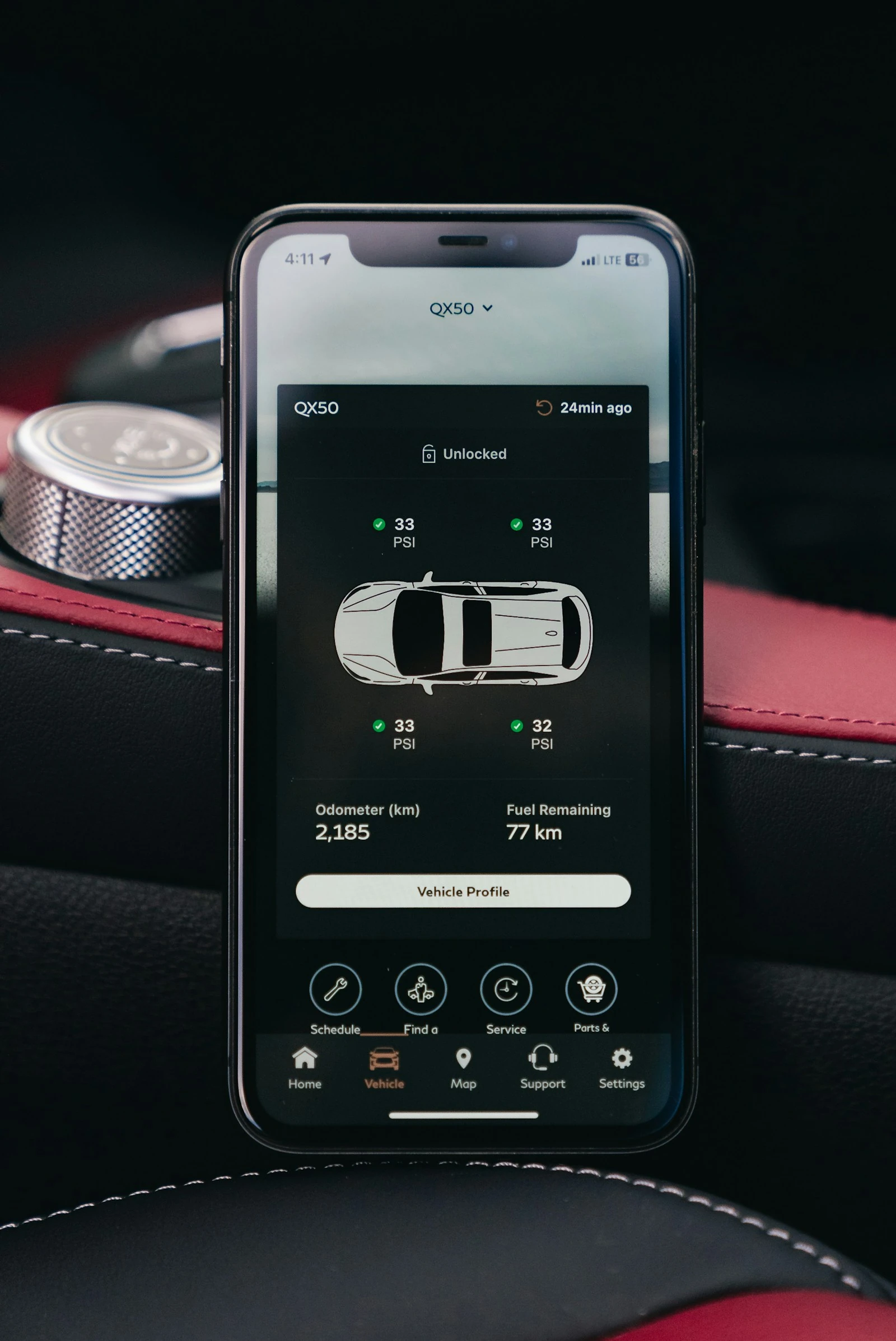
The good news is that tire pressure apps make this much easier. Instead of relying on a warning light that appears late, they give you live readings, temperature data, and alerts before low pressure starts costing you fuel.
How tire pressure apps help you save fuel
Fuel economy and tire pressure are directly connected because low pressure increases rolling resistance. In plain English: your engine has to work harder to keep the car moving.
That matters more than many drivers realize:
- Properly inflated tires can save you up to 11 cents per gallon, according to NHTSA (NHTSA).
- Proper inflation can also extend tire life by about 4,700 miles (NHTSA).
- Tire makers say passenger and light-truck tires can lose 1 to 2 psi per month, plus 1 to 2 psi for every 10°F temperature drop (USTMA Tire Care and Safety Guide).
That last point is why tire pressure apps are genuinely useful. Pressure changes gradually, especially in colder weather, so many people keep driving without noticing. An app paired with sensors can catch that drift early.
NHTSA puts it simply: “Keeping your tires properly inflated can save you up to 11 cents per gallon” (NHTSA).
What these apps actually do
Most tire pressure apps work with Bluetooth TPMS sensors attached to the valve stem or installed inside the wheel. The app then shows your tire pressure and temperature on your phone, and some apps push alerts to your dashboard through Apple CarPlay or similar displays.
In practice, the money-saving part is simple:
- You notice a slow pressure drop earlier.
- You top up before the tire gets seriously underinflated.
- You avoid unnecessary rolling resistance and wasted fuel.
One important limitation: a standard built-in TPMS warning in many cars is not enough on its own. USTMA notes that some systems may not warn you until a tire is as much as 25% below the vehicle maker’s recommendation (USTMA Tire Care and Safety Guide). That is late if your goal is fuel savings, not just emergency warning.
5 practical tire pressure apps
1. FOBO Tire 2
FOBO Tire 2 feels like one of the most complete consumer-friendly systems for regular car owners. Its setup includes an app, four sensors, and an in-car unit that shows tire position status and audible alerts. The official guide says the sensors measure pressure and temperature in real time and send data to both the smart device and the in-car unit (FOBO Quick Start Guide).
What stood out in my review was the amount of control in the app. The full manual shows options for reference pressure, off-road mode, spare tire monitoring, sensor rotation, and Android overlay readings (FOBO User Manual).
Pros
- Real-time pressure and temperature readings
- In-car unit adds alerts even when you are not staring at your phone
- Good feature depth for households with one main car plus a spare
Cons
- More setup than a basic app-only solution
- Best value only if you are willing to install external sensors
- Requires Bluetooth, internet, and permissions during setup
2. TireMinder Lite
TireMinder Lite is clearly aimed at RV and trailer users, but it is still worth mentioning because it shows where the market is going. The company says the app works with its Smart TPMS, monitors 2 to 12 tires, and now supports Apple CarPlay for real-time pressure and temperature display on the vehicle screen (TireMinder).
The practical advantage is visibility. If you drive a larger vehicle or tow regularly, seeing tire data on CarPlay is far easier than checking an app manually at every stop.
Pros
- Apple CarPlay support is genuinely useful
- Real-time pressure and temperature alerts
- Company says the app is privacy-focused and collects no user data (TireMinder)
Cons
- Best suited to RV, caravan, and trailer setups rather than the average small family hatchback
- Requires TireMinder hardware
- Overkill if you only want simple monthly pressure reminders
3. TireMoni TPMS
TireMoni is a straightforward app for drivers who want tire pressure on a phone or tablet without too much fluff. The company says the app is available on Android and iOS, can even be tested without sensors, and works with a Bluetooth dongle plus screw-on sensors (TireMoni).
My impression here is that TireMoni is practical rather than flashy. It focuses on the basics: pressure, temperature, and simple visual monitoring. For budget-conscious drivers, that can actually be a plus.
Pros
- Free app download on both iOS and Android
- Simple, DIY-style installation approach
- Can test the app before fully committing to hardware
Cons
- Extra dongle requirement adds another step
- The design looks more functional than polished
- Less appealing if you want a slick, automotive-style dashboard experience
4. iTPMS
iTPMS is built around Apple users and leans heavily into CarPlay. According to the official site, it offers real-time tire information on Apple CarPlay, quick startup, continuous monitoring, widget support, and compatibility with 2-, 4-, and 6-wheel setups using BLE 5.0 sensors (iTPMS).
This is the app I would put in the “modern convenience” category. If you already use CarPlay every day, seeing tire pressure there makes a lot of sense. It reduces the friction that usually stops people from checking tire data regularly.
Pros
- CarPlay-first design is convenient
- Continuous monitoring while driving
- Flexible for different vehicle types
Cons
- Apple-focused, so not ideal for Android households
- Requires separate BLE 5.0 sensors
- Lighter on published technical detail than some larger brands
5. TMS App
The TMS App is more industrial and data-heavy than the others. Tire Monitor System says its app works on phones, tablets, and PCs, and is designed both to configure TPMS and to store and analyze tire pressure and temperature data. It also supports CSV export, reporting, and use across a whole fleet (TMS App).
For a single household car, this is probably more than you need. But for anyone managing several vehicles, vans, or work cars, the reporting angle is useful because fuel waste often shows up as a maintenance pattern, not just a one-off flat.
Pros
- Strong reporting and data export tools
- Good fit for multiple vehicles or small fleets
- Works across phones, tablets, and PCs
Cons
- More business-oriented than everyday-driver friendly
- Setup and analysis feel heavier than consumer apps
- Probably too advanced for someone who just wants quick pressure alerts
Which app type makes the most sense?
If your goal is simply to spend less on fuel, there are really three routes:
- Everyday car owner: FOBO Tire 2 is the most rounded option here.
- Apple-heavy driver who wants dashboard visibility: iTPMS is appealing.
- RV, caravan, or trailer household: TireMinder Lite makes more sense.
- Simple and functional setup: TireMoni is the easiest to understand.
- Multi-vehicle or business use: TMS App is the strongest fit.
The right choice depends less on “which app is best” and more on whether you will actually keep using it. The fuel savings come from consistency, not from owning the fanciest sensor kit.
Current trends in tire pressure apps
A few clear trends are showing up now:
- CarPlay integration is becoming a real feature, not a gimmick. Both TireMinder Lite and iTPMS highlight it prominently (TireMinder, iTPMS).
- More live monitoring, fewer manual checks. Apps increasingly aim to keep pressure data visible while driving rather than hiding it inside a setup menu.
- More analytics for fleets and heavy users. TMS App now pushes reporting, exports, and trend analysis, which suggests tire pressure monitoring is moving from safety-only into cost control and uptime management (TMS App).
That makes sense. For many households, fuel savings are now a budgeting issue first and a car-tech issue second.
The bottom line
Tire pressure apps are not magic, but they are one of the simplest ways to reduce avoidable fuel waste. If your tires are even slightly underinflated for weeks at a time, you are paying more than necessary every time you drive. A good app helps by turning tire pressure from something you forget into something you actually see.
For cost-conscious drivers, that is the whole point.
References
- U.S. Department of Energy, “Tips For Your Tank This Summer Driving Season”
https://www.energy.gov/articles/tips-your-tank-summer-driving-season - National Highway Traffic Safety Administration, “Safety and Savings Ride on Your Tires”
https://www.nhtsa.gov/tires/safety-and-savings-ride-your-tires - U.S. Tire Manufacturers Association, “Tire Care and Safety Guide”
https://www.ustires.org/sites/default/files/2024-05/Tire%20Care%20and%20Safety%20Guide%20%20Page%202%20deleted%20FINAL%2002%2029%2018%20%281%29_1.pdf - FOBO, “FOBO Tire 2 Quick Start Guide”
https://my-fobo.com/guide/FOBO_TIRE_21707119946.pdf - FOBO, “FOBO Tire 2 User Manual”
https://my-fobo.com/manual/FOBO_TIRE_2_User_Manual_1619060167.pdf - TireMinder, product page
https://www.tireminder.com/new/ - TireMoni, official app page
https://tiremoni.app/en/ - iTPMS, official website
https://itpms.app/ - Tire Monitor System, “TMS App”
https://www.tiremonitorsystem.com/products/tms-app/