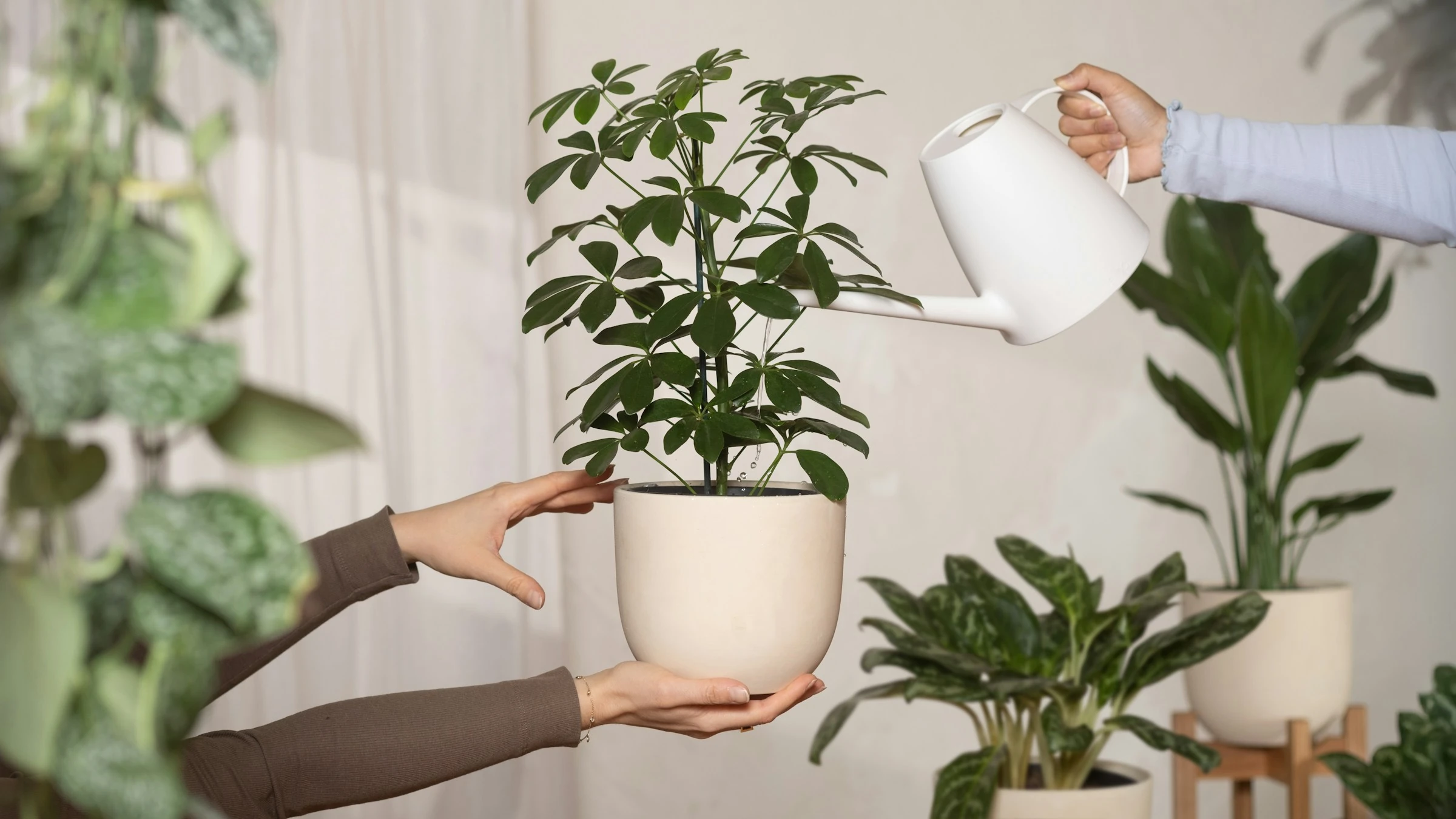

Planta can help you care for plants instead of replacing them, especially if you forget routine tasks. Its main limitation is that reminders and suggested diagnoses cannot guarantee recovery—or savings. For a household watching its spending, the free version is a sensible starting point. Premium needs to solve a problem worth more than its subscription cost.
There is also an important distinction between remembering to check a plant and automatically watering it. University of Maryland Extension recommends watering according to the plant’s actual needs, rather than a fixed schedule. Soil, temperature, and humidity all affect that decision. Source: University of Maryland Extension
How Planta helps you save plants
Planta is a plant-care organizer with reminders, plant profiles, and troubleshooting tools. Its developer describes personalized care schedules, a plant journal, photo identification, a light meter, and Dr. Planta, which suggests diagnoses and treatment plans. These are documented capabilities, not independently verified recovery results. Source: Planta on Google Play
The practical idea is straightforward: keep track of what your plants need, notice problems, and adjust care before deciding to buy replacements.
What you get for free
Planta’s help center identifies watering as the care schedule available without Premium. Plant identification, Dr. Planta, the light meter, plant recommendations, and schedules for other care tasks require a paid subscription. Downloading the app or creating an account does not itself create a charge. Sources: Planta’s feature restrictions, free download and subscription explanation
Our assessment: If your main problem is forgetting to check your plants, free watering reminders may address it without adding another household bill.
What Premium adds
Premium’s troubleshooting and identification tools are more relevant when you do not know what plant you have or why it is struggling. Additional care schedules may also help organize a larger collection.
However, the sources reviewed do not establish a reliable diagnostic accuracy rate or show how many plants Premium saves compared with free care. Treat suggested diagnoses as possibilities to investigate, rather than confirmed explanations.
U.S. price and function comparison
As of 2026-09-28. Prices below are U.S. dollars from the U.S. Apple App Store. Annual totals cover 12 months, assuming the listed subscription price remains unchanged at renewal.
The listing contains multiple prices for the same subscription length. Eligibility for each price is not publicly documented, so the lowest listed amount should not be treated as universally available. Source: Planta’s U.S. App Store listing
| Option | Listed price | Total over 12 months | Functions and material limits |
|---|---|---|---|
| Planta Free | $0 | $0 | Watering schedule; paid troubleshooting tools excluded |
| Planta Premium, annual | $17.99, $35.99, or $47.99 per year | $17.99–$47.99 | Premium tools; eligibility for each price not publicly documented |
| Planta Premium, monthly | $7.99 or $9.99 per month | $95.88 or $119.88 | Premium tools; higher yearly cost if retained for all 12 months |
| Planta Premium, quarterly | $17.99 or $19.99 per three months | $71.96 or $79.96 | Premium tools; four payments over 12 months |
| Manual care log and existing phone reminders | $0 additional, assuming you already have the tools | $0 additional | You research care needs and set reminders yourself; no automated diagnosis |
These are subscription-only totals, before any applicable checkout taxes. Plant supplies and an existing phone or internet connection are excluded. No separate setup fee is listed.
Planta has U.S. Apple availability and an Android Google Play listing. U.S. Android subscription prices are not publicly documented in the reviewed listing; the Apple prices above should not be assumed to apply to Android. Device compatibility and the actual offer require checking your store listing. Sources: U.S. Apple listing, Google Play listing
For Apple subscriptions, Planta’s listing describes automatic renewal unless canceled. The price displayed before purchase matters more than an older review or an advertised monthly equivalent.
Planta’s pros and cons for a tight budget
Advantages
- A free starting point: You can use watering reminders without committing to Premium.
- Care information in one place: The developer documents care tracking and a plant journal.
- Troubleshooting support: Premium adds identification and suggested treatment guidance.
- Help with shared responsibilities: The developer advertises Care Share for coordinating care with family or friends. Source: Planta on Google Play
Disadvantages
- Useful rescue tools cost extra: Dr. Planta and identification are behind the subscription.
- Prices need careful checking: Several U.S. Apple subscription amounts are listed without clear public eligibility rules.
- Recovery is uncertain: Documented features do not establish that a plant will survive.
- Reminders still require judgment: Following a watering prompt without checking moisture can conflict with the plant’s needs. Source: University of Maryland Extension
Our recommendation: Planta is most suitable when missed care or managing several plants is your recurring problem. Premium is less compelling for one inexpensive houseplant, or when you already maintain a reliable routine.
A free alternative: reminders plus a care log
A manual system can be enough for a small collection. The following is a suggested workflow, not an app feature:
- Record each plant’s name and care information.
- Set reminders to check moisture, rather than automatically add water.
- Note watering dates and visible changes.
- Take dated photos to compare the plant’s condition over time.
University of Maryland Extension suggests checking soil moisture and noticing changes in pot weight. Its guidance also notes that succulents and cacti need different treatment from many other houseplants. Source: watering guidance
Advantages: No additional subscription, flexible notes, and direct attention to the plant.
Disadvantages: You must research its needs, maintain records, and interpret symptoms yourself. This option is less suitable if those administrative tasks are exactly what you struggle to keep up with.
For budget-conscious readers, this is the most useful baseline against which to judge Planta. Another paid app is not necessary to answer whether Planta earns its cost.
Can Planta actually save you money?
Hypothetical illustrative scenario: three avoided replacements
Home Depot’s U.S. listing shows a 6-inch Trending Tropical Marble Pothos in a decorative pot at $19.98. That is one replacement-price example, not an average houseplant price; local price and stock may differ. Source: Home Depot’s pothos listings
Assume, over 12 months:
- You would otherwise replace three plants at $19.98 each.
- Better care prevents all three purchases.
- You pay $47.99 for annual Planta Premium.
- You use existing supplies, with no additional treatment or equipment costs.
- Calculations exclude taxes, shipping, and the value of your time.
The arithmetic is:
Avoided purchases: 3 × $19.98 = $59.94
Net savings after Premium: $59.94 − $47.99 = $11.95
At that subscription price, you would need to avoid three such replacements to cover the fee: $47.99 ÷ $19.98 ≈ 2.40, rounded up.
If you avoided only two replacements, the $39.96 saved would fall $8.03 short of the subscription cost. Additional rescue supplies would reduce savings further.
With free Planta or manual care, the same assumed outcome would leave $59.94 before any extra costs. Premium therefore needs to improve your results or convenience enough to justify its fee. None of these outcomes is guaranteed.
What to check before replacing a struggling plant
An app can organize the investigation, but basic checks still matter:
- Check moisture before adding water. Wilting can occur with both insufficient and excessive watering.
- Check drainage. Let excess water escape and empty standing water from the saucer. Source: University of Maryland Extension
- Inspect for pests. University of Minnesota Extension recommends examining indoor plants and separating infested plants from healthy ones. It also links overwatering and poor drainage with root rot and fungus-gnat problems. Source: indoor plant pest guidance
Our assessment is that these checks should guide your next step, whether you use Planta or a notebook. Buying a subscription does not remove the need to identify and correct the underlying problem.
How this comparison was researched
Research was conducted on September 28, 2026, for U.S. consumers. The comparison considers documented care tools, free-versus-paid restrictions, platform availability, 12-month costs, and the potential to avoid replacement purchases.
Sources include developer documentation, official store listings, U.S. university Extension guidance, and a U.S. retailer price example. This is a researched comparison, not a hands-on test. Ratings and testimonials were not treated as evidence of effectiveness. Promotional trials, unclear discount eligibility, and unrelated identification apps were excluded from the savings calculation.
Conclusion
Planta can help you stay organized and investigate plant problems, but it cannot guarantee a rescue. For a tight budget, free reminders and careful observation offer the strongest starting value. Premium makes financial sense only when its added help justifies the fee beyond what free care could achieve.
References
- Planta: U.S. App Store pricing and subscription information
- Planta: Android features and availability
- Planta Help Center: free and Premium restrictions
- University of Maryland Extension: watering indoor plants
- University of Minnesota Extension: managing indoor plant pests
- Home Depot: U.S. pothos price examples