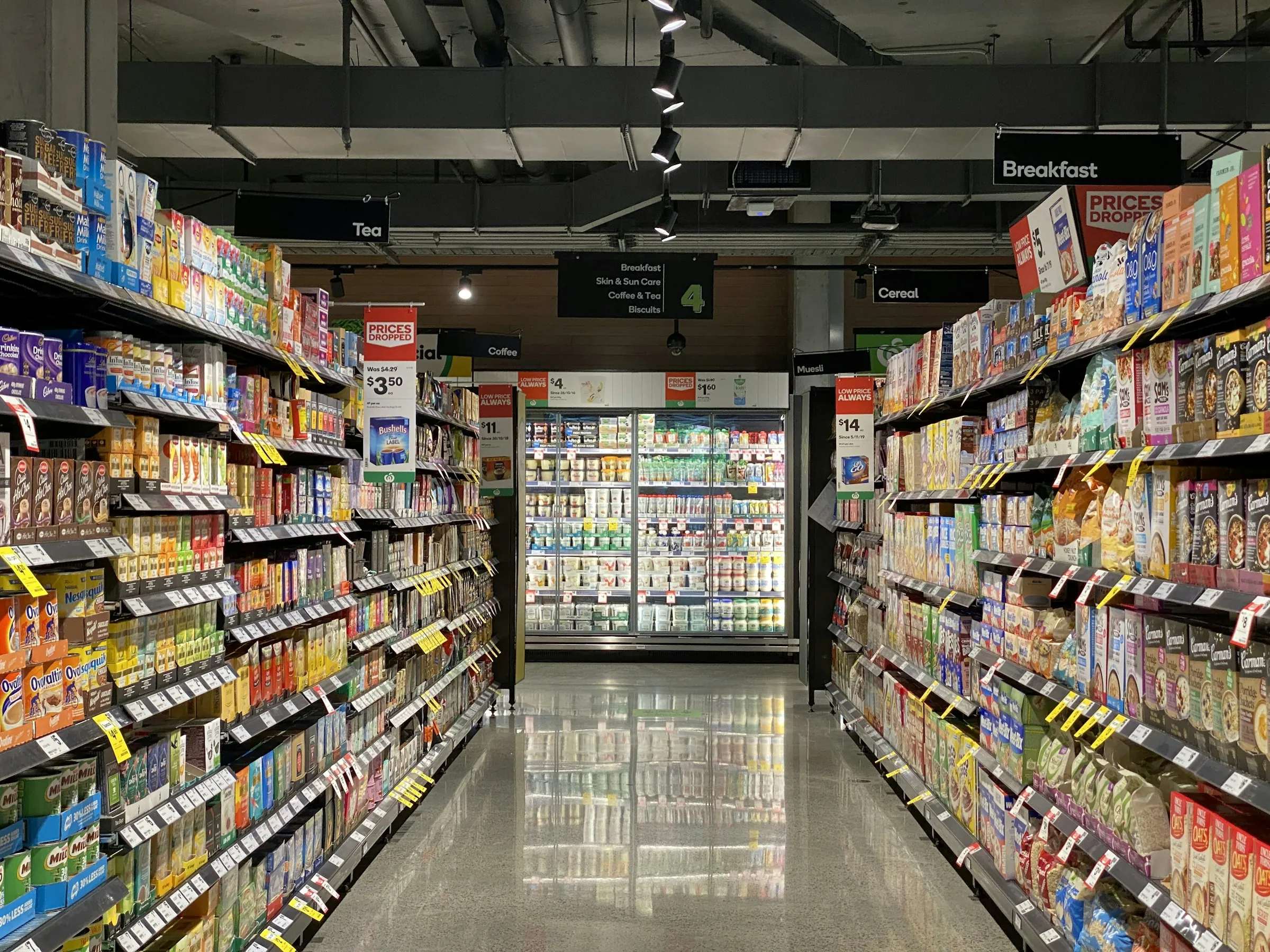

An average UK household of four throws away food worth about £1,000 each year, according to WRAP. That makes one thing clear: a cheaper price per kilogram does not guarantee a cheaper purchase.
Bulk buying can reduce your grocery and household costs, but only when you use enough of the product. A break-even calculation helps you look beyond an appealing “family size” label and decide whether the larger pack genuinely fits your budget and habits.
What does breaking even on a bulk purchase mean?
For household shopping, the break-even point is where the savings from a lower unit price cover any extra costs created by buying in bulk.
Start by comparing like with like:
Unit price = total pack price ÷ quantity
Use the same measurement for every option—such as price per kilogram, litre, sheet or individual item. UK government guidance defines unit pricing as the final price per relevant unit, including VAT and other taxes, and explains that its purpose is to make similar products easier to compare (GOV.UK).
However, unit price is only the first part of the decision. Your realistic bulk cost is:
Effective bulk unit cost =
(bulk price + extra costs) ÷ quantity you expect to use
Extra costs might include delivery, storage containers or the relevant share of a warehouse-club membership. “Quantity you expect to use” excludes anything likely to expire, deteriorate or remain unused.
If there is a fixed fee, you can estimate the quantity needed to recover it:
Break-even quantity =
fixed extra cost ÷ saving per usable unit
This works only when the bulk option has a positive saving per unit. If its adjusted unit cost is already higher, there is no financial break-even point.
Why the biggest pack may not be the best value
The UK Competition and Markets Authority warns that bigger packs, promotional products and multipacks are not always cheaper per unit. Unit prices can also change between shops and over time (CMA).
Before treating a bulk pack as a bargain, consider:
- Likely consumption: How much will your household use before the quality declines?
- Waste: Will part of the product be discarded?
- Cash flow: Can you pay the higher upfront price without squeezing the rest of your monthly budget?
- Storage: Is there suitable cupboard, fridge or freezer space?
- Product certainty: Do you already know that everyone in the household will use it?
- Promotion conditions: Does the displayed price require a loyalty card or a particular combination of products?
- Comparable units: Are both options measured by weight, volume or item count on the same basis?
Bulk purchasing is generally easier to justify for frequently used, shelf-stable goods. Perishable food, unfamiliar products and items with changing household demand require a more cautious estimate.
Which calculator apps genuinely help?
The app-store listings reviewed below were available through UK-facing listings in August 2026. They are primarily unit-price comparison apps, not complete household break-even planners. Their documented features help identify the cheaper pack, but their listings do not say that they account for spoilage, storage or membership costs.
UnitWise: Unit Price Calc for iPhone
Documented functionality
The UK App Store listing says UnitWise can compare different pack sizes, convert compatible units such as grams and kilograms, apply percentage discounts and highlight the lowest unit price. The free version compares two products and stores up to three comparisons; a listed £2.99 one-time Pro purchase raises the limit to eight products and provides unlimited saved history.
It requires iOS 16 or later. The developer says it works offline without advertising or tracking and declares that no data is collected; Apple notes that this privacy information is developer-supplied and not verified by Apple (UK App Store listing).
Pros
- Converts compatible units, reducing manual conversions.
- Includes percentage discounts for straightforward promotions.
- The free two-item comparison is sufficient for a small-versus-bulk decision.
- Supports saved comparisons for prices checked at different shops.
- Has a clear UK price and availability listing.
Cons
- Limited to Apple platforms and requires a relatively recent iOS version.
- More than two products and extended history require the Pro purchase.
- Its documented calculations do not include waste, storage costs or membership fees.
- Apple has not independently verified the developer’s privacy declaration.
- The listing did not yet have enough reviews to show a ratings overview.
Best fit: iPhone users who regularly compare differently sized packs or promotions and want automatic unit conversion.
Unit Price Comparison for Android
Documented functionality
Unit Price Comparison calculates and compares the price per unit of up to six items. Its Google Play description says you enter each price and quantity, after which the app highlights the lowest unit price. It can also represent multiple packs through its quantity field.
The listing says there are no advertisements, no required permissions and no data collection. It also states that comparisons cannot be exported and suggests using a screenshot if you need to retain them. Google Play shows an update dated 26 January 2026, including a fix for a blank-screen problem on Samsung devices (Google Play listing).
Pros
- Compares as many as six choices without a documented paid tier.
- Suitable for comparing several pack sizes or multibuy combinations.
- Simple inputs suit quick calculations while shopping.
- The developer declares no advertising, permissions or data collection.
Cons
- Android only.
- No documented export or saved-history function.
- You must ensure that all quantities use a genuinely comparable unit.
- The documented feature set does not adjust for waste or other ownership costs.
- Google Play availability can still depend on your device, Android version and account region.
Best fit: Android users who want a focused unit-price calculator and do not need automatic records or a full cost model.
A practical app comparison
| Feature | UnitWise | Unit Price Comparison |
|---|---|---|
| Platform | iPhone; compatible Apple devices subject to OS requirements | Android |
| Free comparison limit | 2 items | Up to 6 items |
| Automatic unit conversion | Documented | Not documented |
| Promotion percentage input | Documented | Not documented |
| Saved comparisons | Limited free history; unlimited with Pro | No export; screenshot suggested |
| Full waste or fee calculation | Not documented | Not documented |
| Developer privacy declaration | No data collected | No data collected |
Based on their documented features, UnitWise offers the stronger comparison tools, particularly when pack measurements differ. Unit Price Comparison provides the simpler Android option and handles more choices at once.
Neither replaces a full break-even calculation. After finding the basic unit prices, use your phone’s ordinary calculator or a budgeting spreadsheet to add realistic usage and extra costs.
How to make the calculation useful
A reliable bulk-buying comparison follows a short sequence:
- Enter the actual checkout price, including any discount you qualify for.
- Convert both options to the same unit.
- Calculate the smaller and bulk unit prices.
- Estimate how much of the bulk quantity you will genuinely use.
- Add incremental delivery, membership and storage costs.
- Recalculate the bulk cost per usable unit.
- Compare the result with the smaller pack’s unit price.
- Check whether the higher upfront spend still fits your household budget.
Avoid comparing different products solely by volume when their concentration or serving size differs. Laundry detergent, for example, may be more meaningfully compared by documented washes than by litres. Paper products may require comparison by sheet count and sheet size rather than roll count.
Also check the promotion itself. Current UK guidance generally requires relevant selling and unit prices to be displayed, including conditional prices in many loyalty and multibuy situations, but exemptions exist for certain mixed assortments and reductions (GOV.UK).
When bulk buying usually breaks down
Even an attractive unit-price saving may disappear when:
- A significant share will spoil or go unused.
- The purchase requires a membership used for very few other products.
- Delivery makes the bulk option more expensive.
- The product’s formula, flavour or household demand may change.
- A large purchase causes borrowing, overdraft charges or missed essentials.
- A smaller pack is regularly available on a better promotion.
- Storage conditions could shorten the product’s usable life.
This is why singles and smaller households may reach a different conclusion from large families. The mathematically cheapest pack is only the best financial choice when its usable quantity matches actual consumption.
Conclusion
Bulk buying saves money when the lower unit price survives adjustments for waste, fees, storage and cash flow. UnitWise and Unit Price Comparison can clarify the shelf-price calculation, while a simple break-even formula provides the fuller answer. The best-value pack is the one your household can afford, store and actually use.