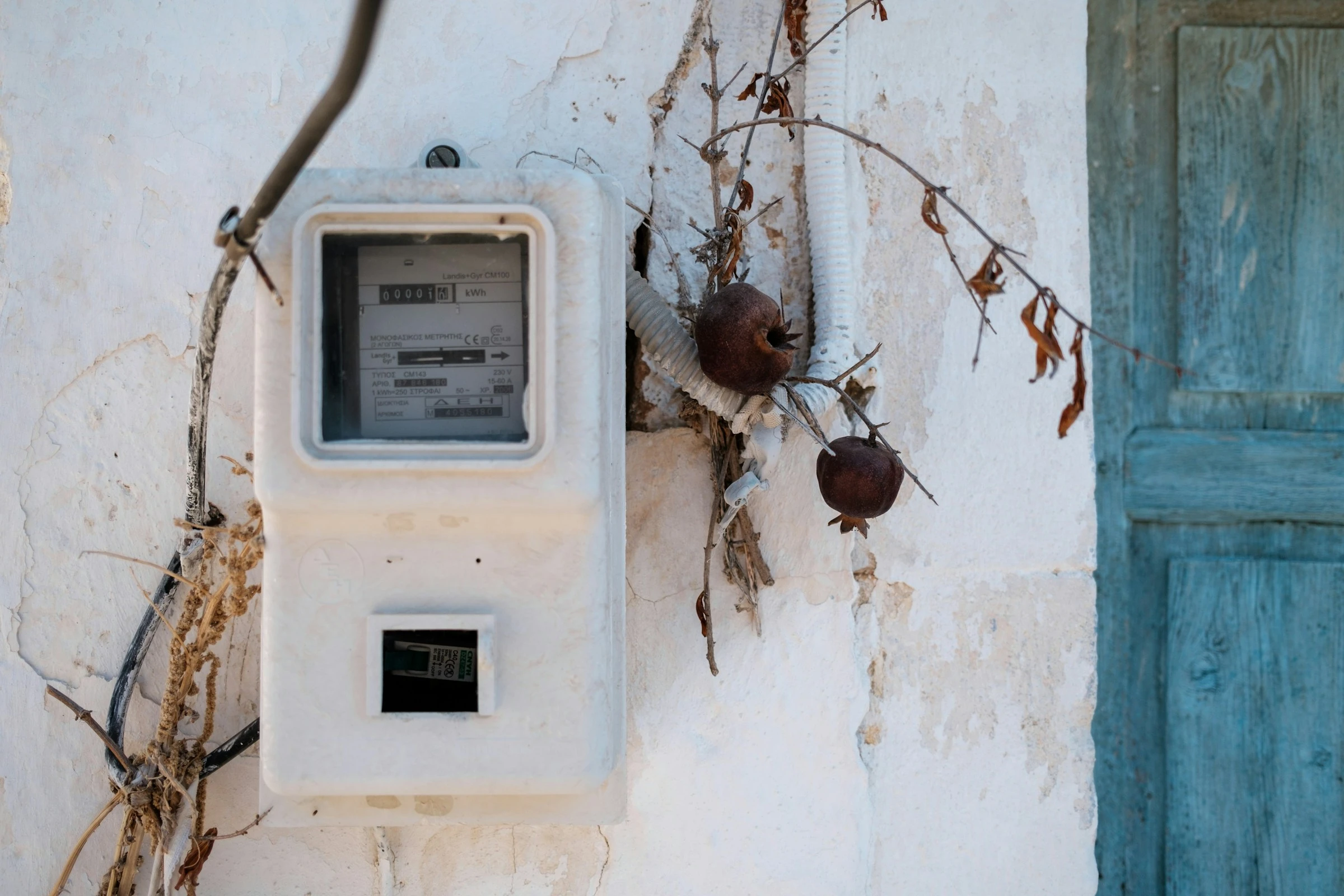

The average US household paid about $144 per month for electricity in 2024, according to the US Energy Information Administration. That makes an app promising smarter electricity use sound appealing—especially when electric vehicles, air conditioning, and home heating can move hundreds of kilowatt-hours each month. (EIA)
Tibber offers exactly that kind of experience in parts of Europe: changing electricity prices, detailed consumption data, and automatic control of compatible devices. But there is an important catch for American households.
As of August 31, 2026, Tibber does not offer a residential electricity tariff in the United States. You may encounter its app in a US app store, but that does not make its electricity contract or core price-optimization service available at your home.
What is a dynamic electricity tariff?
A dynamic tariff changes the price of electricity according to when you use it. The broad idea is simple:
- Electricity costs more when demand is high.
- It generally costs less when demand is low or renewable generation is plentiful.
- A smart meter records consumption during each pricing interval.
- An app shows the applicable prices and helps move flexible loads into cheaper periods.
A fully dynamic plan may follow wholesale-market prices hourly or every 15 minutes. A time-of-use plan, which is more common among US utilities, usually has predetermined peak and off-peak periods instead.
That distinction matters. A time-of-use rate might charge one published price every weekday evening and another overnight. A real-time rate can change much more frequently and may be harder to predict.
The Federal Trade Commission has noted that dynamic pricing can create more opportunities to save and support grid reliability, while also emphasizing the need for timely price information and prominent disclosure of price variability and termination charges. (FTC)
How the Tibber app works
In supported European markets, Tibber combines an electricity contract with an energy-management app. Its documented functions include:
- Displaying changing spot-market electricity prices
- Showing historical consumption and price information
- Providing real-time consumption data when compatible metering equipment is connected
- Automating eligible electric vehicles, heating systems, batteries, and other devices
- Moving flexible consumption toward cheaper periods
- Managing electricity billing and contract information
Tibber says its flexible tariff can use 15-minute spot-market pricing, although tariffs and features differ by country. Its developer platform also documents access to historical consumption, future energy prices, home information, and real-time consumption data. (Tibber overview, Tibber Developer)
This model is more than a budgeting dashboard. Where fully supported, the app, tariff, meter, and connected equipment work together.
Can you use Tibber in the United States?
Not as your residential electricity supplier.
Tibber’s official global terms provide local electricity-contract information for its supported European markets, but do not list a US residential electricity contract. Its international site likewise directs customers to European local services rather than a US electricity offering. (Tibber terms, Tibber international site)
Consequently, an American user generally cannot reproduce the complete Tibber experience merely by downloading the app. The missing element is not the phone software—it is the locally available electricity tariff, compatible meter data, billing relationship, and regional device support.
This is the central answer: the Tibber app is not worth choosing as a US household electricity solution because its core tariff is unavailable in the market.
US price and function comparison
Prices and availability below are for the United States, as of 2026-08-31. Taxes, installation, utility charges, equipment requirements, and address-specific electricity rates may be additional.
| App or service | US price | Electricity plan | Main functions | Material limitations |
|---|---|---|---|---|
| Tibber | US price not publicly documented | Not available as a US residential tariff | European spot-price views, consumption insights, device integrations, and automation in supported markets | Core electricity service is unavailable in the US; European tariffs and integrations should not be assumed to work at a US address |
| Tesla app with Tesla Electric Dynamic | Rates shown after address eligibility is confirmed in the app; no universal public rate | Time-of-use imports and 15-minute market-linked Powerwall or solar exports | Billing, live energy flow, peak/off-peak management, Powerwall settings, export prices, and virtual power plant credits | Only in Texas areas with retail electricity choice; its import rate is not a direct 15-minute wholesale pass-through |
| Emporia Energy app with Vue 3 | App: free with no subscription; Vue 3: $99.99–$199.99 in the US | No—it works alongside your utility plan | Whole-home and optional circuit-level monitoring, cost estimates, alerts, rate-based scheduling, solar tracking, and connected-device control | Requires compatible Emporia hardware for detailed monitoring; it does not change your electricity supplier |
Sources: Tesla Electric Dynamic, Emporia app, and Emporia Vue pricing.
Tibber app: pros and cons for US users
Pros
- Strong underlying concept: Combining prices, consumption, and automation is more useful than simply displaying a monthly bill.
- Useful automation in supported markets: Tibber documents integrations for large household loads such as vehicles and heating.
- Detailed developer access: Its API supports consumption, pricing, home, and real-time energy information for eligible customers.
Cons
- No US electricity tariff: This removes the main reason an American household would choose the app.
- Regional features cannot be assumed: European market prices, meters, devices, billing, and grid programs differ from US systems.
- No meaningful US tariff price to compare: A European subscription or per-kWh charge would not describe the cost of service at an American address.
- An app-store listing is not proof of local service: You must verify electricity-plan eligibility separately.
For a US household, these limitations outweigh Tibber’s documented strengths.
Tesla Electric Dynamic: the closest integrated alternative
Tesla Electric offers one of the closest US equivalents, but only in parts of Texas where customers can choose their retail electricity provider.
Its Dynamic plan uses separate on-peak and off-peak import prices. Tesla documents on-peak hours of 6 p.m. to 9 p.m. and off-peak hours of 9 p.m. to 6 p.m. Rates can be updated monthly and are displayed after the app confirms address eligibility. (Tesla)
For customers with a Powerwall, the app also displays 15-minute real-time market prices for eligible exports. Tesla says qualifying stored energy exported to the grid earns 90% of the applicable real-time market price, while additional transmission, delivery, and tax items appear on the bill.
Pros
- Electricity service, billing, monitoring, and equipment controls share one app.
- Time-of-use pricing rewards shifting consumption away from the evening peak.
- Powerwall owners can monitor market-linked export prices.
- The plan is month-to-month rather than a long fixed term.
- Tesla ownership is not required for basic eligibility, although some functions require a vehicle, solar system, or Powerwall.
Cons
- Availability is restricted to eligible Texas retail-choice areas.
- Current rates are address-specific and not fully visible on a public national price page.
- Grid delivery charges and taxes remain part of the bill.
- The household import price uses defined peak and off-peak periods; it is not the same as Tibber’s European 15-minute spot-price model.
- The strongest automation and export functions depend on expensive Tesla equipment.
There is also a regulatory reason US offerings may look different. Texas prohibits residential retail plans that directly pass real-time ERCOT wholesale prices through to customers. Tesla instead applies time-of-use prices to imported household electricity while using real-time prices for eligible exports. (Public Utility Commission of Texas)
Emporia Energy: better for monitoring your existing plan
Emporia does not sell electricity. Its app works with devices such as the Vue energy monitor, EV chargers, smart plugs, and home batteries.
With a Vue 3 installed in the electrical panel, the app can show whole-home consumption and, depending on the hardware package, individual circuits. It also supports historical comparisons, alerts, solar monitoring, and schedules based on utility rates. (Emporia)
The US Vue 3 costs $99.99 for mains-only monitoring, $149.99 with eight branch sensors, or $199.99 with 16 branch sensors. Emporia says the app, cloud storage, and firmware updates have no recurring fee. (Emporia Vue, Emporia documentation)
Pros
- Available to US households without changing electricity suppliers.
- Free app with no documented subscription fee.
- Circuit-level information can identify which loads are driving the bill.
- Supports time-of-use scheduling for compatible devices.
- Works with solar generation and EV charging equipment.
Cons
- Useful data generally require separate Emporia hardware.
- In-panel installation may warrant a qualified electrician.
- The app does not provide a dynamic electricity contract.
- Savings depend on your tariff, equipment, and willingness to change consumption.
- Vue readings are sent to Emporia’s cloud; local-only device access is not supported.
Emporia’s US App Store disclosure says categories including location, contact information, identifiers, and usage data may be collected and linked to the user. Apple notes that these privacy labels are developer-reported rather than independently verified. (US App Store, Apple privacy-label explanation)
Illustrative savings scenario
Consider a household on a hypothetical US time-of-use plan with these assumed energy charges:
- Peak rate: $0.30 per kWh
- Off-peak rate: $0.10 per kWh
- Shiftable monthly consumption: 150 kWh
- Fixed charges, taxes, and equipment costs: excluded
If the household moves 150 kWh of EV charging, laundry, dishwashing, or water heating from peak to off-peak hours:
Peak cost:     150 kWh × $0.30 = $45
Off-peak cost: 150 kWh × $0.10 = $15
Illustrative monthly difference = $30
Illustrative annual difference  = $360
This is an illustrative scenario, not a savings promise. Your result can be smaller, zero, or even negative if the off-peak discount is narrow, peak consumption cannot be shifted, equipment adds standby use, or the alternative tariff has higher fixed charges.
Before changing plans, compare a full year of interval usage under both rate structures. Looking only at the cheapest advertised price can hide peak rates, delivery charges, minimum-use rules, and seasonal changes.
Who benefits most from flexible electricity pricing?
Dynamic or time-of-use pricing tends to be most practical when you have substantial flexible consumption, such as:
- An electric vehicle that can charge overnight
- A programmable heat-pump water heater
- A home battery
- A pool pump
- Electric heating or cooling with thermal storage
- A dishwasher, washer, or dryer that can run outside peak periods
The value is weaker when most of your electricity use is unavoidable during expensive hours. A family that needs heavy evening air conditioning may have less flexibility than someone who can schedule an EV, battery, and major appliances overnight.
Singles with modest electricity consumption should also consider the payback period of monitoring hardware. Saving $5 per month would take about 20 months to recover a $99.99 monitor before installation costs; saving $20 per month would recover it in roughly five months. Those figures are simple illustrations, not documented product results.
How to find the right US option
Because electricity regulation and retail choice vary by state, there is no single nationwide equivalent to Tibber. A practical comparison starts with your own utility or state-approved retail marketplace.
Check:
- Whether your address has retail electricity choice
- Whether your meter records hourly or shorter intervals
- The complete peak, off-peak, and seasonal schedule
- Monthly customer and demand charges
- Contract length and early termination fees
- Whether the rate is time-of-use, variable, critical-peak, or real-time
- Export compensation if you have solar or a battery
- Whether your EV charger, thermostat, or battery can automate around the rate
Use the official utility website or the contact details printed on your bill. The FTC warns that paid search results and third-party payment sites can impersonate utilities or add unnecessary fees. (FTC consumer advice)
Comparison method
This researched comparison was completed on 2026-08-31 for the United States. It evaluates verified market availability, tariff structure, public pricing, energy monitoring, automation, equipment requirements, platform support, and material privacy considerations.
The primary source basis was official company documentation, developer resources, US app-store information, the US Energy Information Administration, the Federal Trade Commission, and the Public Utility Commission of Texas. This was not a hands-on test.
Utility-specific apps were not individually ranked because thousands of local rate structures exist and availability depends on the service address. EV-only charging apps and demand-response reward programs were also excluded where they did not provide a close comparison with Tibber’s combined tariff, monitoring, and automation model.
Is the Tibber app worth it in the US?
For most US households, no. Tibber’s best features are tied to electricity contracts and market infrastructure that are not available in the United States.
Tesla Electric Dynamic is the closest integrated alternative for eligible Texas households, particularly those with a Powerwall. Elsewhere, a utility’s own time-of-use plan combined with a monitoring system such as Emporia is the more realistic approach.
The app matters, but the tariff matters more. Savings come from the difference between your actual peak and off-peak costs—and from how much consumption you can genuinely move.
References
- US Energy Information Administration: 2024 residential bills
- Tibber international overview
- Tibber global terms and supported contracts
- Tibber Developer platform
- Tesla Electric Dynamic plan
- Public Utility Commission of Texas: residential wholesale-indexed plans
- Emporia Energy app
- Emporia Vue specifications and US pricing
- Federal Trade Commission: dynamic electricity pricing