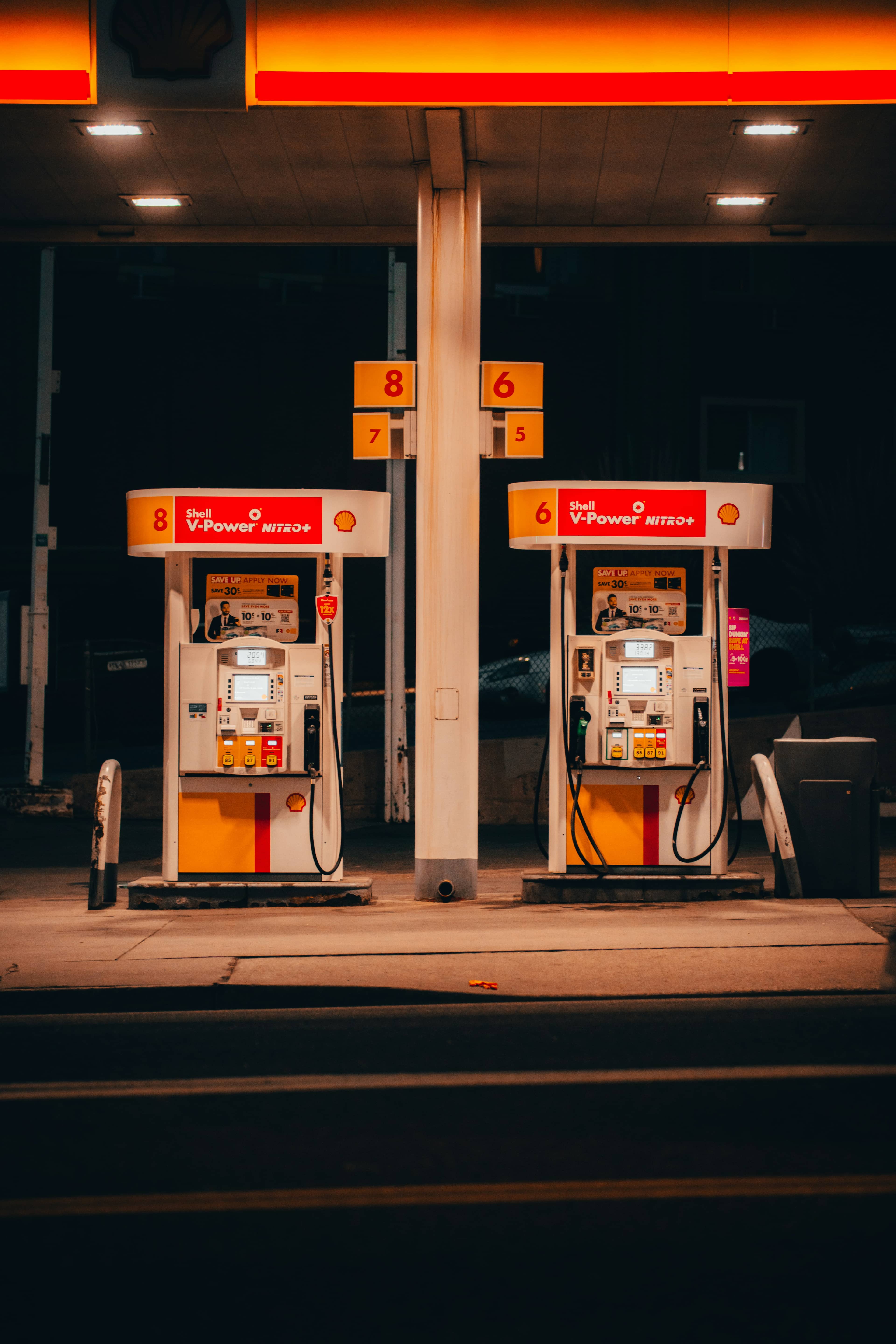

No. In the US, buying gas before noon won't reliably save you money. The "12 o'clock rule" (German: 12-Uhr-Regel) comes from a law in Germany and Austria that lets gas stations raise prices only once a day, at noon. The US has no such rule. Here, stations can change prices whenever they want. The patterns that do exist show up mostly in which day you buy and which station you pick, not the hour. One more catch: no US gas app we reviewed publicly documents hour-by-hour price history. So you can't use an app to check a "before noon" strategy for your own area.
Below you'll find how the German rule works, why it doesn't carry over to the US, which habits are backed by data, and which apps actually help.
What the "12 o'clock rule" is and how it works
The idea comes from Austria. Gas stations there may raise prices only once a day, at noon, but they can cut prices at any time. Austria has extended that rule through the end of 2028, according to the Law Library of Congress.
Germany passed its own version, which took effect on April 1, 2026. Its stations can now raise gasoline and diesel prices only once a day, at 12:00 noon. Price cuts are still allowed at any time (ADAC; IamExpat).
The result is a predictable daily pattern:
- Prices jump at noon.
- They drift down through the afternoon and the next morning.
- They hit their daily low just before the next noon increase.
Germany's largest auto club, the ADAC, analyzed more than 14,000 stations in May 2026. On an average day, the gap between the most and least expensive moment was 14.6 euro cents per liter for E10 gasoline and 18.4 cents for diesel. The cheapest window was just before noon, with a second good window from about 5:30 p.m. The ADAC also reports that overall price levels have risen since the rule started (ADAC). So in Germany, "fill up before noon" is real advice, but it only works because the law forces price hikes into that one slot.
Why the noon rule doesn't apply in the US
Market scope: United States, as of October 2026.
- No federal or state law in our research limits price increases to a set hour. We found no current US state bill copying the Austrian model. A 2014 academic paper noted that New York had discussed similar limits in the past (Obradovits, International Journal of Industrial Organization). That's not current law.
- US stations change prices less often. GasBuddy's Patrick De Haan has said the average station changes prices a few times a week. In volatile periods, a station may change several times a day (WAVY/Nexstar).
- We found no authoritative US data on morning vs. afternoon prices. Without that, "fill up before noon" is a guess, not a strategy.
What the US data does show: the day matters more than the hour
GasBuddy's 2026 analysis looked at a year of daily statewide average prices (SlashGear; CarPro). According to that coverage:
- Sunday is the cheapest day in most states, and Monday is usually second.
- Wednesday through Friday tend to cost the most. Thursday is often the priciest day.
- Filling up on the cheapest day instead of the most expensive one typically saves 4 to 9 cents per gallon.
- There are exceptions: Alaska, Delaware, Indiana, Kansas, Montana, Ohio, Pennsylvania, South Dakota and Wyoming don't follow the Sunday pattern.
- Some states have "price cycles." In places like Michigan, Indiana, Ohio, Florida, Texas and parts of the West Coast, stations raise prices sharply on one day and then lower them slowly. The best prices often come five to seven days after a jump. The gap between peak and bottom can be 15 to 45 cents per gallon or more.
De Haan links part of the weekly pattern to the Energy Information Administration's (EIA) Wednesday report. Prices can rise the day after it comes out, then "ride" over the weekend (Yahoo/Detroit Free Press).
Our take: If you live in a price-cycling state, timing really pays off. Fill up near the bottom of the cycle, not right after a spike. Everywhere else, a simple "fill up Sunday or Monday" habit is the best timing rule the data supports. Turning that into a single weekly money rule you'll actually stick to often works better than chasing the clock.
Current price context
US national averages, EIA.
The US average for regular gasoline was $4.331 per gallon for the week of October 12, 2026. That's $1.27 higher than a year earlier. Regional prices ranged from $3.851 on the Gulf Coast to $5.639 on the West Coast (EIA Gasoline and Diesel Fuel Update). The EIA expects October prices to stay close to September's, then slowly decline (EIA Short-Term Energy Outlook, October 2026). At these prices, a few cents per gallon adds up faster than it did in 2025.
Comparison method
- Research date and market: October 19, 2026, United States.
- Criteria: Whether the app helps with timing or station choice, cost, eligibility requirements, platform support, how fresh the price data is, and major restrictions.
- Sources: Official App Store listings, developer help pages, government data (EIA), and reported findings from GasBuddy's 2026 day-of-week analysis.
- This is not a hands-on test. We didn't install or use these apps. Everything below comes from documentation.
- What we left out: Store-specific loyalty apps (e.g., grocery or warehouse club fuel rewards) and credit cards, because they work differently and depend on membership. For a broader list of options, see our guide to fuel-finding apps that can help you save at the pump.
Gas apps compared (US, as of 2026-10-19)
| App | Cost (US) | Main help | Hourly price history | Price data source | Platforms (documented) | Key restrictions |
|---|---|---|---|---|---|---|
| GasBuddy (free app) | Free | Find the cheapest nearby station; route prices | Not publicly documented | Crowd-sourced | iOS 15.5+ (App Store) | Prices for US and Canada only; possible lag |
| Pay with GasBuddy+ (free tier) | $0 | At least 3¢/gal off with the card | Not applicable | Not applicable | Via GasBuddy app | Card issued by Fifth Third Bank; Auto Pay required for savings (GasBuddy Help) |
| GasBuddy+ Plus | $7.99/month (GasBuddy) | 20¢/gal on the first 50 gal per month, then 5¢ | Not applicable | Not applicable | Via GasBuddy app | Monthly cap resets on billing date (GasBuddy Help) |
| GasBuddy+ Premium | $9.99/month or $99/year | Same fuel discount + roadside help (up to 2 events/year) | Not applicable | Not applicable | Via GasBuddy app | Cardholders on Auto Pay only (GasBuddy Help) |
| Upside | Free | Cash back of up to 25¢/gal at participating stations | Not publicly documented | Offer-based | iPhone (App Store) | Must claim an offer first; rates vary |
| Waze | Free | Station prices along your drive | Not publicly documented | User-reported | iOS/Android | Price editing not supported on CarPlay/Android Auto (Waze Help) |
| Google Maps | Free | Quick nearby price check | Not publicly documented | Not publicly documented | iOS/Android | Old prices flagged after 24+ hours; some warehouse stores show no prices (9to5Google) |
App-by-app: pros and cons
GasBuddy (free app)
What's documented: Crowd-sourced prices you can filter by fuel type, sort by price or distance, and view along a road-trip route. Also includes fuel tracking, recall alerts, and a points program. Prices cover the US and Canada only. Apple's privacy label says the app may use data including location to track you across other companies' apps and sites (App Store).
- Pros: Free. Strong for comparing stations, which is where the biggest local price gaps usually show up. Route view helps on longer trips.
- Cons: Crowd-sourced prices can lag behind real changes. Users in App Store reviews mention occasionally inaccurate prices. The privacy label includes tracking. No documented hourly price history, so it can't test a "before noon" idea.
- Good for: Almost anyone who wants a free station comparison.
- Not ideal for: People who don't want to share location data.
Pay with GasBuddy+ (free, Plus, Premium)
What's documented: The free tier guarantees at least 3¢/gal off. Plus ($7.99/month) and Premium ($9.99/month or $99/year) give 20¢/gal on your first 50 gallons each month, then 5¢/gal. Premium adds Allstate roadside assistance (up to 2 events a year) and a repair hotline (GasBuddy Help; App Store).
- Pros: Guaranteed per-gallon savings, no matter what time of day you buy. The free tier has no fee.
- Cons: Requires a Fifth Third–issued card with Auto Pay. Paid tiers only pay off at higher fuel use (see the break-even math below). Daily spending limits apply.
- Good for: Households that use 50+ gallons a month and are comfortable with the card setup.
- Not ideal for: Low-mileage drivers, or anyone who'd rather not link a bank account.
Upside
What's documented: Claim an offer in the app, pay with any credit or debit card, and earn up to 25¢/gal back at participating stations (brands include Shell, Exxon, BP and Circle K). You can cash out to your bank or as gift cards (App Store).
- Pros: Free. Works with your existing card. Can add savings at a station that's already competitive.
- Cons: Cash back depends on the offer and varies, so you can't plan around a fixed rate. Only participating stations count.
- Good for: Drivers who regularly pass participating stations.
- Not ideal for: People who want a predictable, guaranteed discount.
Waze
What's documented: Other drivers update the prices, so they "may not always reflect the current price." To edit a price, you need to be within 0.3 miles of the station and have driven at least 100 miles with the app (Waze Help).
- Pros: Free. Prices show up inside the app you may already use for driving.
- Cons: Prices can be out of date, especially in rural areas. Editing isn't supported on CarPlay or Android Auto.
- Good for: Commuters who already navigate with Waze.
- Not ideal for: Checking exact prices before a detour in low-traffic areas.
Google Maps
What's documented by third parties: Tap the "Gas" shortcut to see regular-grade prices on the map. Prices older than 24 hours are flagged, and some warehouse and supermarket stations show no prices at all (9to5Google). We couldn't find a current official Google help page for US gas prices, so treat these details with some caution.
- Pros: Free and already on most phones. Good for a quick check.
- Cons: No official US documentation found. Can't filter in depth. Some low-cost warehouse stations may be missing.
- Good for: A fast "what's nearby" check.
- Not ideal for: Serious price hunting.
Hypothetical savings scenario
This is an illustration, not an observed result. Savings aren't guaranteed.
Assumptions: A household buys 12 gallons a week (624 gallons a year, about 52 gallons a month) at the EIA national average of $4.331/gal. That's about $2,703 a year on gas.
1. "Fill up before noon" (US): No sourced US price difference exists, so the expected savings can't be calculated. $0 documented.
2. Fill up on the cheapest day instead of the most expensive one (4–9¢/gal, per GasBuddy's analysis):
- 624 × $0.04 = $24.96 a year
- 624 × $0.09 = $56.16 a year
3. GasBuddy+ tiers, per month (52 gallons):
- Free tier (minimum 3¢): 52 × $0.03 = $1.56
- Plus: (50 × $0.20) + (2 × $0.05) = $10.10, minus the $7.99 fee = $2.11 net. That's only $0.55 more than the free tier.
- Premium: $10.10 − $9.99 = $0.11 net. That's $1.45 less than the free tier, unless you'd otherwise pay for roadside assistance.
Break-even vs. the free tier (fuel discount only):
- Plus: Each of your first 50 gallons earns 17¢ more than the free tier (20¢ − 3¢). So $7.99 ÷ $0.17 ≈ 47 gallons a month.
- Premium: The first 50 gallons earn $8.50 extra. After that, each gallon adds only 2¢ more than the free tier. So you'd need roughly 125 gallons a month before the fuel discount alone covers the $9.99 fee.
What this shows: For a typical family, the free habits (picking the right day, comparing stations, and cycle timing if you live in a cycling state) are worth more than chasing the clock. Paid tiers only make sense for heavy drivers.
The bottom line
The 12 o'clock rule works in Germany and Austria because the law puts every price increase at noon. In the US, there's no such rule and no solid data showing that mornings are cheaper. The savings backed by evidence come from buying on cheaper days (usually Sunday or Monday), timing the bottom of the cycle in price-cycling states, and comparing stations. Free apps like GasBuddy, Waze, Google Maps and Upside help with that. Paid GasBuddy+ tiers only pay off if you buy a lot of gas each month. Whichever you use, treat app prices as a guide, because none of them publicly documents hour-by-hour data.
References
- ADAC – Neue Preis-Regeln seit April 2026: Wann ist Tanken am günstigsten?
- Law Library of Congress – Austria: Additional Limit on Raising Gas Prices
- IamExpat – German gov't: Fuel stations can only raise prices once daily
- Obradovits – Austrian-style gasoline price regulation (ScienceDirect)
- WAVY – What's the cheapest day of the week to buy gas?
- SlashGear – Best Days To Buy Gas In 2026, According To GasBuddy
- CarPro – When is the best time to fill your car with gas
- Yahoo/Detroit Free Press – Why Sunday and Monday may be cheapest to fill up
- EIA – Gasoline and Diesel Fuel Update
- EIA – Short-Term Energy Outlook, October 2026
- App Store – GasBuddy: Find & Pay for Gas
- GasBuddy Help – Membership Levels
- GasBuddy Help – Membership Savings Limits
- GasBuddy – GasBuddy+ Plus
- App Store – Upside: Gas & Food Cash Back
- Waze Help – Edit gas types and prices
- 9to5Google – How to find gas prices with Google Maps