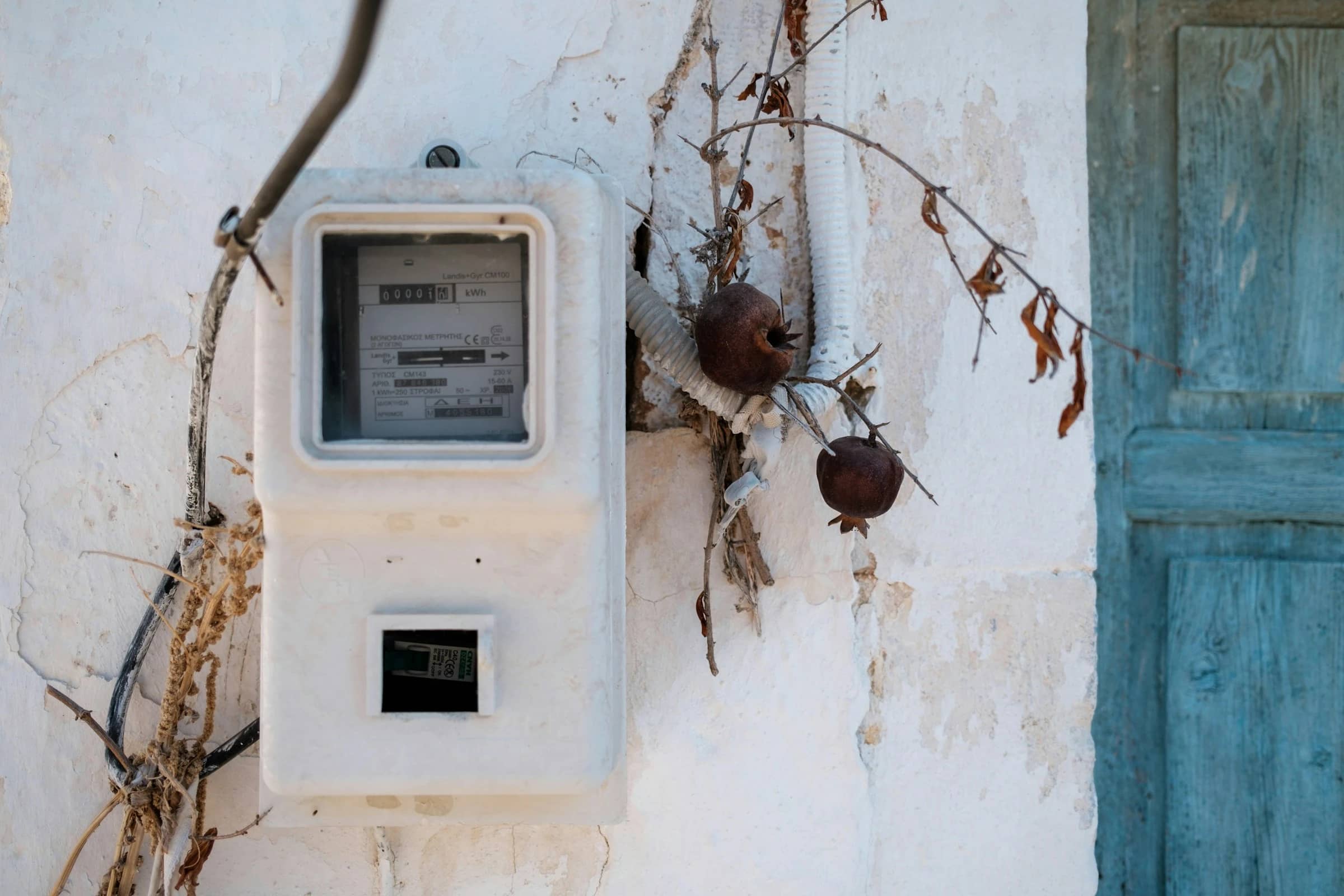

You may be able to change who supplies your electricity without changing who delivers it. The U.S. Energy Information Administration explains that, where electricity supplier choice is available, your distribution utility still delivers power to your meter. Eligibility depends on your local market. Source: EIA
That distinction matters if you’re looking at CHECK24 to lower your electric bill. CHECK24 documents electricity comparison and switching for Germany; a U.S. electricity-switching service is not publicly documented in the sources reviewed. Its approach is useful to understand, but American households need an option that supports their address.
How does the CHECK24 app help you switch?
For German customers, CHECK24 brings electricity comparison and contract management together. Its app listing documents electricity and gas comparisons alongside access to contracts in a customer account. The German comparison process uses your postal code and annual electricity consumption in kilowatt-hours, or kWh, to find local offers. Sources: CHECK24 app listing, switching guide
The basic process is:
- Enter your location and electricity usage.
- Compare available prices and contract terms.
- Choose an offer and submit your switching details.
- Manage the resulting contract through your account.
CHECK24 says its comparison and subsequent provider-switching service are free for customers in Germany. That describes the comparison service—not free electricity. Source: CHECK24 energy FAQ
Pros: Comparison, switching, and contract access sit within one service.
Cons for U.S. readers: The documented electricity service concerns Germany. Its offers, euro-denominated savings promotions, and German switching guidance do not establish eligibility or savings for an American address.
Can you switch electricity providers in the United States?
Sometimes. U.S. electricity supplier choice—also called retail choice—is available only in certain markets and utility territories. Your state alone may not settle eligibility; your distribution utility matters too. The EIA recommends checking with that utility or your state utility regulator. Source: EIA
For a budget-conscious household, that makes address eligibility the first filter, before app ratings or advertised savings.
It also changes what you compare. In Pennsylvania, for example, the utility’s “price to compare” provides a benchmark for comparing the generation portion of your bill. A cheaper supply offer does not mean every charge on your bill falls. Source: Pennsylvania PUC’s PAPowerSwitch FAQ
Price and function comparison
As of 2026-09-06. U.S. membership prices below are in USD. Service fees are separate from electricity charges.
| App or service | Market and availability | Documented price | Documented switching help | Main limitation |
|---|---|---|---|---|
| CHECK24 | German electricity service; U.S. switching availability: not publicly documented | Comparison and switching free in Germany | Compare electricity offers, submit a switch, access contracts | Not a verified option for a U.S. electricity account |
| Arbor | Selected U.S. competitive utility territories; iPhone and web access | No customer service fee; compensated by suppliers | Analyze usage, arrange a supplier switch, monitor rates and renewals | Coverage varies; does not access every supplier rate |
| Energy Ogre | Competitive areas of Texas; iPhone and Android | $12/month or $130/year | Membership handles plan selection, enrollment, monitoring, and renewals; app provides account tools | Texas eligibility restriction and recurring membership cost |
Sources: CHECK24 app and fees; Arbor U.S. App Store listing, web service, and eligibility FAQ; Energy Ogre pricing, mobile apps, and service area.
These are service prices, not electricity-rate quotes. No address-specific plan prices were obtained for this comparison.
Arbor: automated switching in selected U.S. markets
Documented functionality: Arbor’s U.S. iPhone listing describes connecting your utility account, comparing available rates using your location and usage, arranging a switch, and checking again before a plan expires. It says customers pay no service fee because electricity suppliers compensate Arbor. Source: Arbor App Store listing
Regional limits: Arbor’s eligibility FAQ lists Connecticut, Delaware, Illinois, Massachusetts, Maryland, Maine, New Hampshire, New Jersey, New York, Ohio, Pennsylvania, Rhode Island, and Washington, D.C. Some utilities within those markets are excluded. Its homepage also mentions Texas, so its public coverage descriptions are not fully aligned; Texas eligibility should be treated as unconfirmed until its address check accepts the location. Sources: Arbor eligibility FAQ, homepage
Pros
- No customer membership fee to subtract from potential savings.
- Documented switching and renewal support can reduce administrative work.
- Serves eligible territories across multiple states.
Cons
- Arbor explicitly says it does not access every supplier rate or guarantee the lowest available rate.
- State coverage does not guarantee utility-level eligibility.
- A current native Android app was not publicly documented in the reviewed sources. Source for rate and eligibility limitations: Arbor FAQ
Our assessment: Arbor is relevant if you want help managing supplier changes without a subscription. Its selected offers still deserve comparison against your current contract and utility benchmark.
Energy Ogre: paid electricity management in Texas
Documented functionality: Energy Ogre’s membership covers plan selection, enrollment, market monitoring, renewals, and switching. The mobile app supports bill-photo uploads, contract viewing, payment-method updates, account notifications, and contact with member support. The switching work belongs to the broader service; the app helps you manage that relationship. Sources: Energy Ogre, app features
Regional limits: Energy Ogre says it serves only competitive areas of Texas. Its address checker determines whether a particular home qualifies. Source: Energy Ogre service-area information
Pros
- Documented support covers enrollment and renewals.
- Both iPhone and Android apps are available.
- Contracts and payment information are accessible through the app.
Cons
- Membership costs $144 over 12 monthly payments, versus $130 for the annual option.
- Smaller electricity savings may not cover the subscription.
- Households outside eligible Texas territories cannot use the service. Sources: pricing, eligibility
Our assessment: Energy Ogre may suit eligible Texans who value ongoing administrative help. Its financial benefit should be measured after membership costs.
What about privacy?
For the U.S. apps, store disclosures warrant attention. Arbor’s Apple listing identifies tracking through identifiers. Energy Ogre’s Google Play disclosure says personal and financial information may be shared with third parties. These are developer-provided disclosures, not independent privacy audits. Sources: Arbor privacy label, Energy Ogre data safety
How much could switching save?
Illustrative Texas scenario—not a current offer or guaranteed result.
Assume:
- Your household uses 1,000 kWh each month.
- A comparable replacement plan reduces electricity costs by 2 cents per kWh.
- Usage and all other charges stay unchanged.
- There is no early-termination fee.
The arithmetic is:
- Monthly reduction: 1,000 × $0.02 = $20
- Annual reduction: $20 × 12 = $240
- After Energy Ogre’s monthly membership: $240 − $144 = $96
- After its annual membership: $240 − $130 = $110
The membership figures come from Energy Ogre’s published U.S. pricing; usage and rate differences are hypothetical.
For a smaller household using 500 kWh monthly, the same difference saves only $120 annually before membership. That would leave a $24 net cost with monthly billing, or a $10 net cost with annual billing.
The lesson: compare dollars after fees, not just a lower cents-per-kWh figure.
What should you check before switching?
For a practical example, Pennsylvania’s official PAPowerSwitch website lets households compare offers and filter for fixed rates, no cancellation fees, no monthly fees, and no introductory prices. It is a comparison website, not another switching app. Source: PAPowerSwitch shopping tool
Useful questions include:
- Is the rate fixed or variable? A fixed unit rate does not make your total bill fixed when usage changes.
- Are there monthly or enrollment fees? Include them in the comparison.
- Does an introductory price expire? Compare the full contract period.
- Will leaving your current contract trigger a fee? Check before authorizing a switch.
- What happens at renewal? A good initial price is only part of the decision.
Pennsylvania’s regulator documents these rate structures and contract considerations; rules elsewhere should be checked with the relevant state regulator. Sources: PAPowerSwitch offer filters, switching FAQ
How this comparison was researched
Research was conducted on September 6, 2026, for U.S. residential customers, with German sources used to explain CHECK24’s original role.
Criteria included switching functionality, geographic eligibility, published service fees, platform availability, and material limitations. Sources were developer documentation, official app-store listings, and U.S. government or regulatory guidance.
This was a researched comparison, not a hands-on test. No accounts were connected, switches submitted, or personal savings measured. General budgeting apps and single-provider billing apps were excluded because they do not directly answer the cross-provider switching task.
Conclusion
CHECK24 shows how an app can simplify electricity comparison and switching in Germany. For U.S. households, the equivalent help depends on local eligibility: Arbor offers supplier-funded automation in selected territories, while Energy Ogre provides paid management in competitive Texas markets. The useful measure is the total cost after fees and contract terms.